Mexican Catering: Feed Guests Well With Less Stress 2026
Plan with a Mexican catering checklist for events in Old Toronto. Timelines, portions, labels, and logistics tips help you serve guests well without stress.
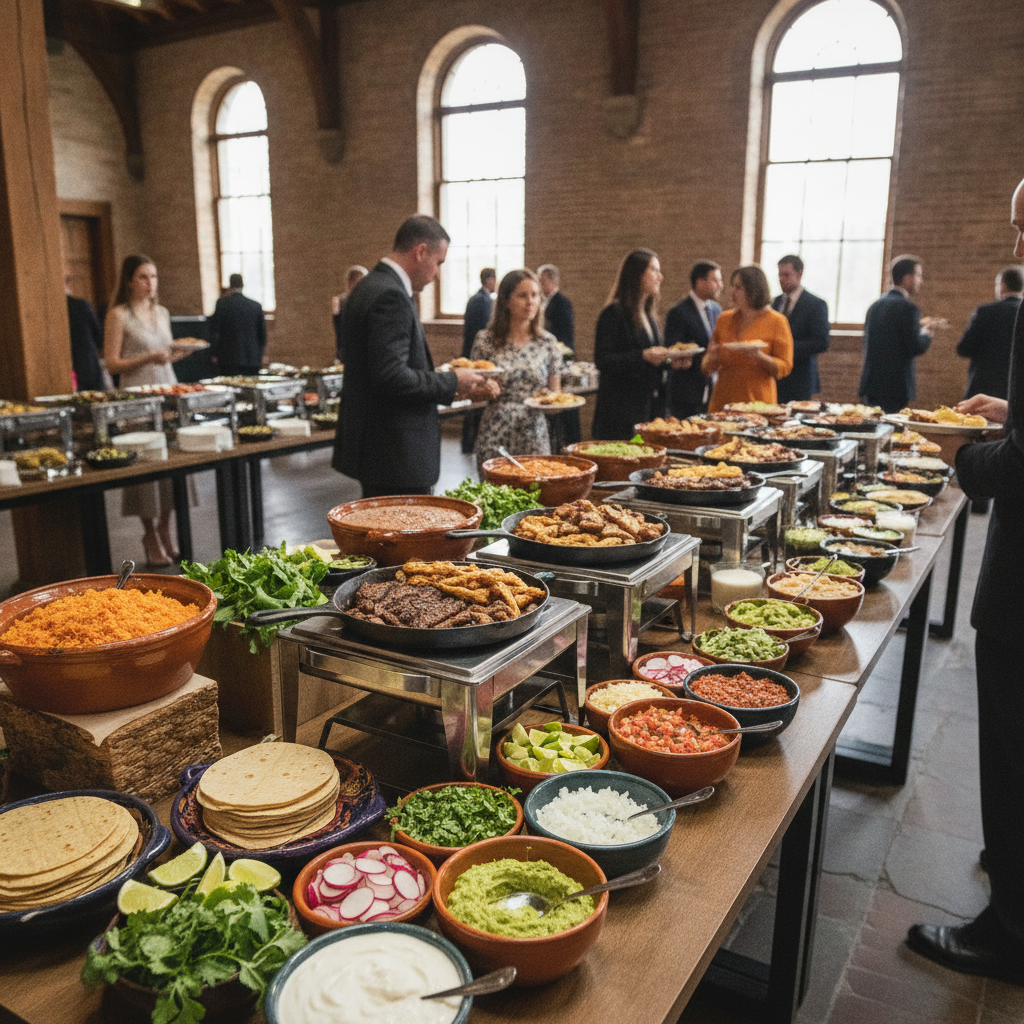
Mexican catering checklist for events refers to a step-by-step plan that covers menu design, portions, dietary labels, delivery logistics, staffing, and food safety. It helps Old Toronto hosts serve flavorful Mexican cuisine with fewer surprises. Use this guide to organize, confirm, and execute every task with confidence alongside La Rio’s Mexican Grill.
By Sam Patel — Founder, La Rio’s Mexican Grill • Last updated: June 24, 2026
Overview
This complete guide delivers a practical Mexican catering checklist you can copy, plus timelines, portion math, service-style comparisons, and food-safety cues. It’s built for Old Toronto events and pairs proven steps with real-world examples from La Rio’s Mexican Grill to keep guests happy and your run-of-show on time.
Planning food for a group gets complicated fast. Headcount shifts. Allergies pop up. Delivery windows tighten. Our goal is to help you tame the chaos and feed everyone well—without stress.
- What you’ll learn: a copyable checklist, portion math, timelines, and staffing tips
- Why it matters: fewer surprises, faster decisions, safer service, happier guests
- Who it’s for: coordinators, office managers, couples, and community hosts in Old Toronto
Use the table of contents to jump where you need help most, then return to the checklist before you hit Send on final confirmations.
Table of contents
- What is a Mexican catering checklist?
- Why this checklist matters
- How Mexican catering works with La Rio’s
- Service styles and approaches
- Your complete Mexican catering checklist
- Best practices and food safety
- Tools and resources
- Case studies and examples
- FAQ
- Conclusion + key takeaways
What is a Mexican catering checklist?
A Mexican catering checklist is a structured planning tool that sequences discovery, menu building, headcount locking, logistics, dietary labeling, and day-of execution. It reduces errors, sharpens timing, and standardizes service so every guest gets a hot, delicious plate within 8–12 minutes of joining the line.
Think of it as your event food operating system. It translates goals into tasks, assigns owners, and verifies nothing slips. The format is simple, but the payoff is huge when headcount or schedules shift.
Core elements
- Discovery: event goal, guest profile, venue rules, and timing windows
- Menu math: portions per person (e.g., 2–3 tacos, 4–5 oz protein), sides, and add-ons
- Dietary map: vegan/vegetarian/gluten-friendly labeling and separate utensils
- Logistics plan: delivery window, elevator access, staging, and cleanup
- Run-of-show: minute-by-minute setup, service, and replenishment cues
We apply this framework to taco bars, fajita bars, family-style platters, and individually packaged meals—whatever fits your space and guest flow best.
Why this checklist matters
Checklists turn catering chaos into a repeatable process. They prevent under-ordering, ensure safe holding temperatures around 140°F for hot foods, and keep lines moving so guests eat within 10 minutes. The result is fewer delays, cleaner communication, and consistent portions across every tray.
Food service is time-sensitive. Without a plan, minor hiccups compound into late trays or empty pans. A written sequence creates shared expectations across hosts, caterers, and venue managers.
Benefits you can measure
- On-time service: define a 30–45 minute setup window and lock it 72 hours out
- Portion control: target 2 tacos per guest at lunch, 3 at dinner; proteins ~5 oz/person
- Allergen clarity: standard labels for vegan/vegetarian/gluten-friendly, plus nut or dairy flags
- Line speed: dual-sided taco bars serve 60–80 guests in ~15 minutes
- Less waste: add a 5–10% buffer based on RSVP volatility instead of guesswork
We’ve seen office lunches finish 12 minutes faster on average when service lanes are split, signage is visible, and utensils are mirrored on both sides of the table.
How Mexican catering works with La Rio’s
Our Old Toronto catering flow is simple: clarify goals, customize your menu, lock headcount 5–7 days out, confirm delivery and setup, label dietary items, and assign a service lead for day-of execution. Expect 30–45 minutes for setup and 15–20 minutes for tear-down.
La Rio’s Mexican Grill supports dine-in, takeout, and full-service catering. Most corporate and social events in Old Toronto choose a taco or fajita bar with grilled specialties and clearly labeled sides.
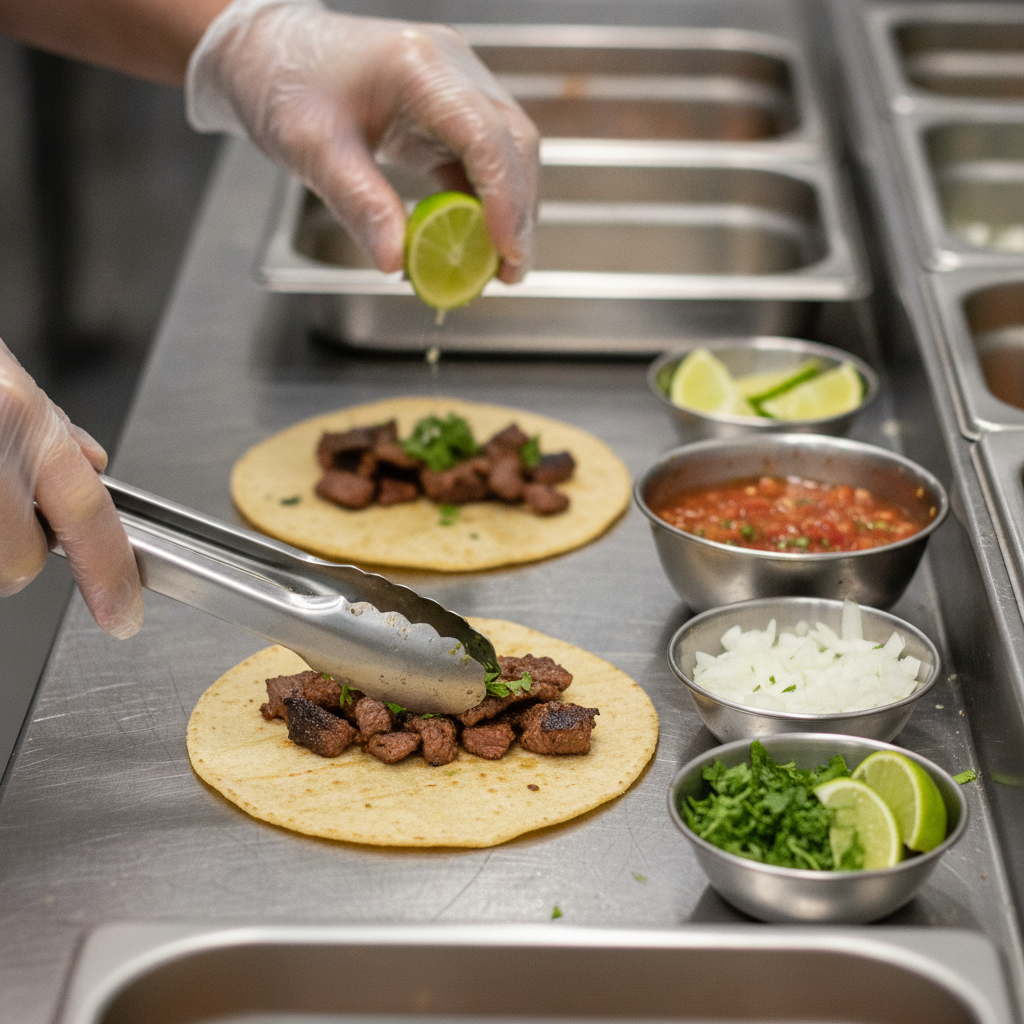
Typical end-to-end flow
- Goal + guest profile (10 minutes): meeting, celebration, or training; expected appetites and dietary mix.
- Menu build (20 minutes): proteins, tortillas, rice/beans, salsas, toppings, beverages, and dessert.
- Portion math (10 minutes): 2–3 tacos per person; 3 oz rice + 3 oz beans; 1–2 oz toppings.
- Logistics (15 minutes): access path, elevator, staging, and table/linen availability.
- Confirmations (5–7 days out): final headcount, delivery window, building rules, and labels.
- Day-of (setup 30–45 minutes): chafers at safe temp, signage, duplicate utensils, and service lead.
For a drop-off lunch of 50, we recommend a dual-sided taco bar to serve everyone in ~12–15 minutes with two attendants guiding flow.
Local considerations for Old Toronto
- Outdoor venues near Trinity Bellwoods Park benefit from sturdy plateware and wind-proof, low-profile signage.
- Weekend timelines should add a 10–15 minute buffer for event traffic around Fort York National Historic Site.
- Heritage buildings with tight elevators often require staggered drop-offs and insulated carriers for hot holding.
Ready to see menu formats? Explore our catering overview or jump right to a taco bar configuration that fits your headcount and venue.
Service styles and approaches
Choose service style by space, speed, and dietary mix. Taco and fajita bars maximize choice and line speed; family-style platters suit seated groups; individually packaged meals simplify strict dietary separation; drop-off works for small teams, while staffed service keeps large lines moving smoothly.
You don’t need a ballroom to feed a crowd. The right style depends on table length, guest flow, and how strictly you must separate allergens or dietary preferences.
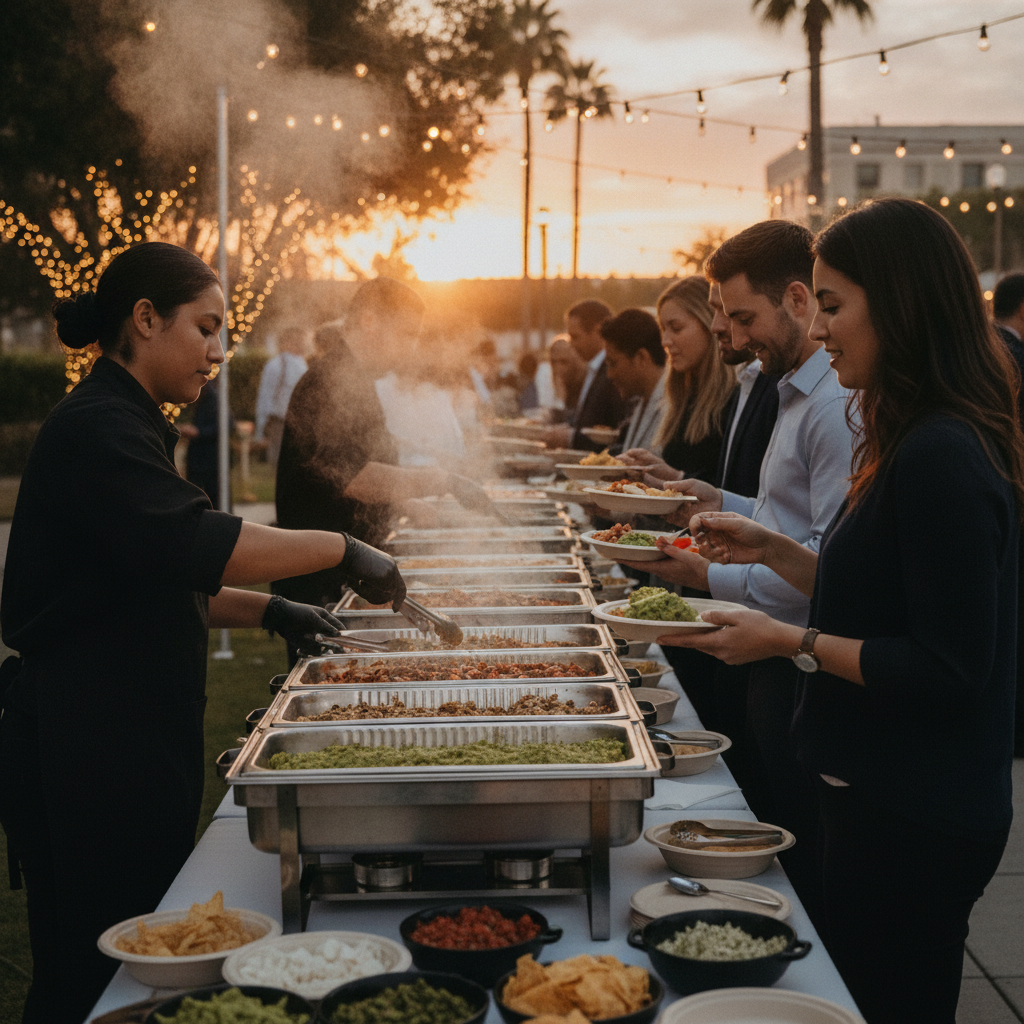
Popular formats
- Taco bar: 2–3 proteins, tortillas, toppings, rice/beans; dual-sided for 60–80 guests per 15 minutes.
- Fajita bar: grilled peppers/onions and warm tortillas; excellent for dinner crowds with 3-taco appetites.
- Family-style platters: platters per table; best for seated celebrations or short toasts.
- Individually packaged: sealed boxes; ideal for trainings or when rooms turn quickly.
- Drop-off vs staffed: drop-off saves floor space; staffed keeps lines consistent and labeled.
Quick comparison
| Style | Best for | Speed | Dietary control | Notes |
|---|---|---|---|---|
| Taco bar | Mixed groups 25–150 | 60–80 guests/15 min | Clear labels; mirror utensils | Use dual-sided layout for large groups |
| Fajita bar | Dinner or hearty appetites | 50–70 guests/15 min | Similar to taco bar | Add veggie fajitas for plant-based eaters |
| Family-style | Seated events | Table-paced | Moderate | Great for toasts and shared moments |
| Individually packaged | Trainings, exams, off-sites | Fast handout | High | Best for strict allergen separation |
Choosing is easier when you see the layouts. Browse our buffet-style catering guide or explore individually packaged options for controlled portions and speed.
Your complete Mexican catering checklist
Use this checklist to move from idea to plates-on-table with zero guesswork. It’s grouped by timeline—discovery, menu design, headcount, logistics, confirmations, and day-of execution—so you always know the next decision, who owns it, and when to confirm details.
Discovery (2–4 weeks out)
- Define your event goal (celebration, training, client pitch, or town hall).
- Estimate headcount and RSVP volatility (+/− 10% early, tighten later).
- Capture venue rules: loading zone, elevator access, table/linen availability, and waste streams.
- Choose a service style: taco bar, fajita bar, family-style, or individual boxes.
- Note dietary patterns: vegan, vegetarian, gluten-friendly, dairy-free, halal-friendly preferences.
Menu design (10–14 days out)
- Pick 2–3 proteins (grilled chicken, beef, or veggies) to balance flavors.
- Select tortillas (corn, flour) and set a warming plan (covered, warmed to ~160–170°F).
- Plan sides: 3 oz rice + 3 oz beans per person; include a fresh salad or slaw for contrast.
- Choose salsas: mild, medium, hot; 1–2 oz per guest; include lime (½ lime per person).
- Add finishing touches: cilantro, onions, crema/cheese (clearly labeled), and pickled veggies.
Portion math (7–10 days out)
- Tacos: lunch 2/person; dinner 3/person; heavy-appetite crowds may average 3.5.
- Protein: ~5 oz cooked weight/person across your selection.
- Rice/beans: ~6 oz combined/person (3 + 3); salads 3–4 oz/person.
- Toppings: 1–2 oz/person; salsa 1–2 oz/person; guacamole 1–2 oz/person.
- Dessert: 1 portion/person; beverages: 12–16 oz/person for 60–90 minutes of programming.
Logistics and layout (7–10 days out)
- Confirm table length (two 6-ft tables support a dual-sided bar serving 60–80 guests/15 min).
- Plan a U-shape or straight run; leave 3 ft clearance behind tables for staff.
- Secure access: loading dock, elevator size, and reserved elevator time if needed.
- Power check: avoid cords across guest paths; chafers run on fuel; induction needs circuits.
- Signage: low-profile, wind-resistant for outdoor; bold icons for allergens and dietary tags.
Confirmations (5–7 days out)
- Lock final headcount (aim within ±3%).
- Set delivery window (setup 30–45 minutes; service time block 60–120 minutes).
- Send building instructions (security desk, elevator code, parking, and contact phone).
- Confirm labeling plan (vegan/vegetarian/gluten-friendly; dairy or nut callouts).
- Assign an on-site lead and a backup contact with mobile numbers.
Day-of execution
- Meet in the lobby 30 minutes before arrival; escort team to staging area.
- Set chafers to safe temps (hot foods held around 140°F or warmer; cold items chilled).
- Mirror utensils so both sides of the table flow; tongs every 18–24 inches.
- Post signage at eye level; place dietary icons adjacent to each relevant pan.
- Open service once all lanes are complete to avoid bottlenecks on first guests.
- Replenish proteins at 70% empty; rotate pans to keep temps and textures consistent.
- Close with a 15-minute buffer for seconds; begin tear-down after final announcements.
Post-event (within 48 hours)
- Capture learnings: what ran out first, line speed, and guest feedback themes.
- Update your template for the next event; note venue quirks and preferred layouts.
Need a planning partner? Our catering request form helps you submit the right details the first time, so we can recommend portions and a layout that fits your room.
Best practices and food safety
Keep hot foods hot (around 140°F or warmer), cold foods cold, and label allergens clearly. Mirror utensils on both sides of the bar, open multiple lines for groups of 40+, and lock headcount 5–7 days ahead. These fundamentals prevent bottlenecks and protect guests with dietary needs.
Great food matters—and so does flow. Simple prep before guests arrive shapes the entire experience.
Line-speed boosters
- Two entrances, one exit for bars over 8 feet; dual-sided layouts halve wait times.
- Place salsas and limes after proteins to prevent early bottlenecks.
- Use two napkin stations to prevent pileups at the end of the line.
Safety fundamentals
- Hot holding around 140°F or warmer; rotate pans every 20–30 minutes to maintain quality.
- Cold items on ice baths; refresh at 45-minute intervals for outdoor service.
- Dedicated utensils for vegan/vegetarian/gluten-friendly trays; place labels at pan level.
Dietary clarity
- Icons work: V (vegan), Veg (vegetarian), GF (gluten-friendly), DF (dairy-free).
- Duplicate every label on both sides of the bar; 2-inch-high cards are easy to scan.
- Separate crema/cheese to topping stations to keep core trays dairy-free by default.
Want controlled portions with fast handout? See our individually packaged catering format for trainings or mixed-diet groups.
Tools and resources
Use templates to save time: a portion calculator, allergen matrix, run-of-show timeline, and post-event debrief sheet. Pair them with a brief intake form and a labeled floor plan so every stakeholder can confirm details in under 10 minutes.
These lightweight tools remove friction and reduce email back-and-forth.
Templates worth copying
- Portion calculator: tacos/person, protein oz/person, sides/person, beverages/person.
- Allergen matrix: list menu items by row; dietary icons by column.
- Run-of-show: delivery, setup, open service, replenishment checks, close, tear-down.
- Debrief notes: what ran low, what overperformed, venue and elevator notes.
Helpful reads
For regional event food planning ideas beyond Mexican cuisine, you might find these perspectives useful: a Toronto-centric catering checklist, general planning tips for office lunches, and a broad corporate catering overview. They’re written for the city context and can spark layout or flow ideas:
Skim a Toronto catering checklist, browse event food planning tips, and review a corporate catering guide for boardrooms and off-sites.
Free planning consult: Share your headcount, dietary mix, and venue constraints. We’ll recommend portions, a layout, and a run-of-show that fits your room. Start with our catering request form.
Case studies and examples
These quick scenarios show how the checklist adapts to real Old Toronto events. Note the service style, setup time, and line-speed strategy. Each example pairs portion math with layout choices to keep guests fed quickly without sacrificing flavor or safety.
Corporate lunch, 60 guests, mixed dietary needs
- Service: dual-sided taco bar with three proteins and vegan fajitas.
- Setup: two 6-ft tables; 30 minutes; mirrored utensils and labels on both sides.
- Portions: 2 tacos/person; ~5 oz protein/person; 3 oz rice + 3 oz beans.
- Line speed: 60 guests served in ~12 minutes with two attendants.
Outcome: clean flow, zero allergen confusion, and a short, happy line.
Family reunion picnic, 45 guests, outdoor
- Service: drop-off taco bar with wind-resistant signage and covered tortillas.
- Setup: 25 minutes; ice baths for cold items; chafers for hot holding.
- Portions: 3 tacos/person; extra limes and slaw for freshness.
- Line speed: single line, 45 guests in ~15 minutes; second napkin station reduced congestion.
Outcome: sturdy disposables and smart signage kept the picnic tidy and quick.
Evening celebration, 90 guests, seated with toasts
- Service: family-style platters; proteins and warm tortillas at each table.
- Setup: 45 minutes; runners replenish trays at 70% empty.
- Portions: 3 tacos/person; salads 3–4 oz/person; dessert at tables.
- Line speed: table-paced; servers coordinated with toast schedule.
Outcome: smooth speeches, hot food, and thoughtful pace around the program.
Frequently Asked Questions
Most hosts ask about lead time, portions, dietary accommodations, staffed versus drop-off service, and tactics to avoid long lines. These quick answers reflect how we plan Old Toronto events so you can decide faster and confirm details sooner.
How far in advance should I book Mexican catering?
Two to four weeks gives you the best menu flexibility and delivery windows. Lock headcount 5–7 days out, and set your 30–45 minute setup window 72 hours before the event. For peak Fridays, earlier is always better, especially for staffed service.
What portions should I plan per guest?
Plan 2 tacos per person for lunch and 3 for dinner. Budget about 5 oz cooked protein per guest, 3 oz rice and 3 oz beans, plus 1–2 oz toppings. Add a 5–10% buffer if your RSVP list is still moving.
Can you handle vegan, vegetarian, and gluten-friendly requests?
Yes. We separate utensils, label trays at pan level, and keep dairy-based toppings on the side. We can add veggie fajitas, corn tortillas, salads, and clearly marked sides to support mixed-diet groups without slowing the line.
What’s the difference between drop-off and staffed service?
Drop-off includes delivery and setup so your team can self-serve. Staffed service adds attendants who guide flow, replenish pans, and manage labels—ideal for 40+ guests, short lunch windows, or formal programs that can’t risk delays.
How do I avoid long lines at the taco bar?
Run a dual-sided layout, mirror utensils, and position toppings after proteins. Open two lines for groups over 40 and place napkin stations at two points. Start service only when all lanes are complete so early guests don’t bottleneck.
Conclusion and key takeaways
A strong checklist keeps Mexican catering predictable: plan portions, label clearly, lock headcount on time, and design a layout that matches your room. With these fundamentals, you’ll feed guests quickly and confidently at any Old Toronto event.
Here’s the thing—great events aren’t about guessing. They’re about systems. When you use the same sequence each time, food becomes the easiest part of your program.
Key takeaways
- Lock headcount 5–7 days out; set a 30–45 minute setup window 72 hours prior.
- Target 2 tacos/person at lunch, 3 at dinner; ~5 oz protein/person.
- Keep hot foods hot (around 140°F or warmer); mirror utensils and labels on both sides.
- Choose service style by speed, space, and dietary mix; dual-sided bars move 60–80 guests/15 min.
- Document what you learn and reuse the template for your next event.
Curious about on-premise dining versus to-go for rehearsals or team nights? Our perspective on Mexican grill takeout vs dine in can help you match format to the moment before you lock your plan.
When you’re ready, launch your plan with our catering overview or send details via the catering request form. We’ll reply with tailored portions, a layout recommendation, and a timeline that fits your room and run-of-show.