Mexican Cuisine Planning: Make Meals Guests Love in 2026
Mexican cuisine menu planning tips for dine-in, takeout, and catering in Old Toronto. Build balanced tacos, bowls, and sides guests love in 2026.
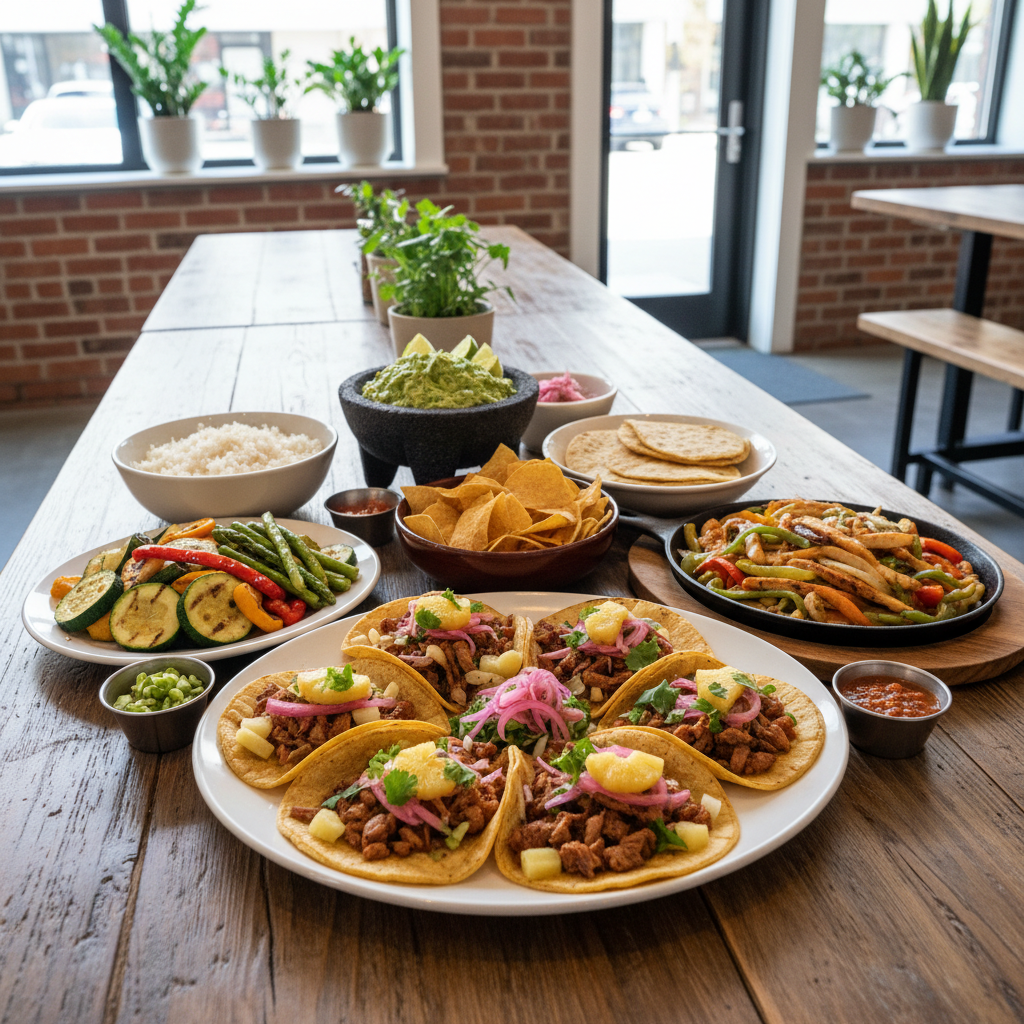
Mexican cuisine menu planning tips are the practical rules restaurants and hosts use to build balanced tacos, bowls, fajitas, and sides that satisfy different tastes. At 746 Queen St W in Old Toronto, La Rio’s Mexican Grill applies these tips across dine-in, takeout, and catering so guests enjoy consistent flavor and smooth service.
By Sam Patel — Founder, La Rio’s Mexican Grill
Last updated: May 6, 2026
Above-the-Fold Overview: Hook + TOC
This complete guide turns Mexican cuisine planning into a repeatable playbook. Use it to shape crowd-pleasing menus, streamline prep, and deliver consistent dishes across dine-in, takeout, and catering. You’ll get clear steps, chef-tested ratios, and local tips our team uses daily in Toronto.
Here’s the thing: when guests decide where to eat, they picture flavors and speed. Your menu should do both. We built this guide around what works in our kitchen so you can skip guesswork and plan with confidence.
Quick Summary
- Build around three anchors: a hero protein, a fresh counterpoint, and a signature sauce.
- Use simple portions: 3–4 tacos per adult, 4–6 ounces of protein per bowl, 6–8 ounces of sides.
- Offer clear pathways for dine-in, takeout, and catering so guests know what travels well.
- Local note: Old Toronto lunch rush favors fast, handheld items; evenings lean shareable platters.
Table of Contents
- What Is Mexican Cuisine Menu Planning?
- Why Menu Planning Matters
- How Menu Planning Works (Step-by-Step)
- Approaches to Structure
- Best Practices from Our Grill
- Tools and Resources
- Case Studies and Examples
- FAQ
- Wrap-Up and Next Steps
What Is Mexican Cuisine Menu Planning?
Mexican cuisine menu planning is the process of arranging proteins, bases, toppings, and sauces into balanced choices that travel well, plate beautifully, and meet dietary needs. The goal is a simple, flavorful lineup with clear paths for dine-in, takeout, and catering so ordering feels effortless.
In our experience, great planning starts with the eating experience. Will a guest get crunch, heat, and freshness in every bite? Can they swap to a veggie build without friction? Those questions guide the rest.
Core building blocks
- Proteins: Chicken asado, carne asada, al pastor, shrimp, veggies, beans.
- Bases: Corn or flour tortillas, rice bowls, salad greens, chips.
- Fresh finishers: Pico de gallo, cilantro, onions, lime, slaw.
- Signature sauces: Salsa roja, salsa verde, chipotle crema, queso.
- Sides: Rice, beans, grilled peppers and onions, elote-style corn.
At La Rio’s, we keep a short list of signature sauces and pair each with a hero protein. That way, every item tells a clear flavor story and is easy to prep fast during a rush.
Why Menu Planning Matters
Menu planning cuts waste, speeds service, and makes flavor consistent. In busy Toronto service windows, a tight menu means fewer slowdowns, better food integrity in takeout, and higher guest satisfaction because choices are obvious and portions make sense.
Here’s why it matters to guests and operators:
- Clarity sells: Clear options reduce order friction and boost confidence for first-time visitors.
- Speed wins rushes: A repeatable prep rhythm keeps lines moving during lunch in Old Toronto.
- Quality travels: Items tuned for delivery stay crisp and flavorful after the walk or ride home.
- Less waste: Shared prep across different dishes uses ingredients fully.
- Dietary trust: Labeled gluten-friendly or vegetarian pathways reduce back-and-forth at the counter.
We’ve found that a compact, modular menu lets us scale up for catering without changing our kitchen flow. That’s how the same taco bar can feed a family of four or a 60-guest office.
How Menu Planning Works (Step-by-Step)
Plan Mexican menus in five steps: define occasions, pick hero proteins, map bases and sauces, set portions, then test for travel and service speed. Document the build steps so cooks and hosts replicate flavor in dine-in, takeout, and catering.
Five-step planning process
- Define the occasion: Lunch, dinner, family night, office team, or event buffet.
- Select 2–3 hero proteins: Example: chicken asado, carne asada, Rio’s shrimp.
- Map bases and sauces: Tacos, bowls, salads; match with signature salsas.
- Set portions and sides: Use simple, repeatable ratios guests can trust.
- Test for travel and flow: Simulate takeout timing; practice line speed.
Simple portion benchmarks
- Tacos: 3–4 per adult; 1.5–2 ounces cooked protein per taco; double tortilla for juicy builds.
- Bowls: 4–6 ounces protein; 1 cup rice; 1/2 cup beans; two fresh toppings; one sauce.
- Fajitas: 4–5 ounces protein; 1 cup mixed peppers/onions; 3–4 tortillas per person.
- Sides: 6–8 ounces per person for rice or beans when served standalone.
Planning table: From idea to service
| Step | Owner | Target output | Service check |
|---|---|---|---|
| Occasion & guest count | Host/Manager | Meal window + headcount | Rush timing noted |
| Protein & base map | Chef/Lead | 2–3 proteins, 2 bases | Cross-prep possible |
| Finishers & sauces | Chef/Lead | 2 fresh, 1 sauce | Color/heat balanced |
| Portion plan | Chef/Lead | Per-guest grams/ounces | Waste minimized |
| Travel & hold test | Service Lead | Packaging + timing | Texture preserved |
Document these in a one-page SOP. We post ours on the line so anyone can jump in and hit the same marks during a surge.
Approaches to Structure
The strongest Mexican menus use modular structures: taco pathways, bowl builders, and fajita sets. Keep 2–3 proteins universal so prep overlaps, then create a few signature items as anchors. This balances variety with speed, both in Old Toronto and across the wider Toronto metro.
Modular pathways
- Taco pathway: Guests pick protein, tortilla, two fresh toppings, and one sauce.
- Bowl pathway: Rice or greens, protein, beans, grilled veg, and a drizzle.
- Fajita sets: Shared platters with peppers/onions and warm tortillas.
- Veg-first route: Grilled vegetables and beans with bold salsa to lead.
Signature anchors
- Rio’s Shrimp Tacos: A bright, citrus-forward bite that stands out among seafood options. See our shrimp tacos details for inspiration.
- Chicken Asado: A dependable hero protein that works in tacos, bowls, or enchiladas. Explore our chicken asado tacos.
- Ground Beef Classics: Comforting and kid-friendly, ideal for family orders. Our ground beef tacos are a steady favorite.
These anchors reduce decision fatigue while giving repeat guests a reason to come back for different builds.
Local considerations for Old Toronto
- Foot-traffic timing: Lunch moves fast near Trinity Bellwoods Park; prioritize tacos and bowls that assemble in under a minute per order.
- Seasonal swings: Patio months favor fresh slaws and citrus; colder evenings push fajitas and warm queso. Events near The Bentway benefit from travel-friendly packaging.
- Neighborhood mix: Old Toronto draws families and office teams; clear family packs and taco bars help groups order quickly.
Best Practices from Our Grill
Focus on fewer, better builds. Standardize cook temps, season in stages, and lock down travel tests. Label vegetarian and gluten-friendly swaps. These practices keep flavor consistent and service quick across dine-in, takeout, and catering.
Flavor and texture
- Season in layers: Marinade, grill seasoning, and finishing salt/lime.
- Protect crunch: Keep slaw and chips separate from hot items in takeout.
- Heat range: Offer mild, medium, and hot without changing base recipes.
- Color code plates: Aim for green, red, and neutral tones on every build.
Speed and consistency
- One-tool rule: Each station should complete a build with minimal utensil swaps.
- Batch smart: Grill proteins in waves aligned to rush windows; hold with moisture control.
- Label paths: Put visual guides at the line for tacos, bowls, and fajitas.
- Travel tests: Time-box a 20-minute ride; confirm crunch and sauce balance still sing.
Clear dietary pathways
- Vegetarian-first builds: Promote roasted veggies with black beans and salsa verde.
- Gluten-friendly planning: Offer corn tortillas and clear cross-contact SOPs.
- Dairy-flexible: Make crema and queso optional add-ons, not defaults.
We link these practices directly to items guests recognize. For example, when we promote a taco bar for group orders, we steer folks to our taco bar catering so they can see what scales smoothly.
Tools and Resources
Use a one-page menu matrix, a portion calculator, and a packaging checklist. These simple tools keep your team aligned during a rush and protect texture for takeout and catering. We rely on them daily to replicate flavor and speed.
Your menu matrix (make a copy)
- Rows: Proteins and bases you’ll keep year-round.
- Columns: Tacos, bowls, salads, fajitas, kids’ builds.
- Cells: Default toppings and sauce for each combo.
Packaging checklist
- Keep hot and cold apart: Separate containers for slaw, chips, and sauces.
- Vent smart: Perforated lids for crispy items; tight seals for saucy builds.
- Label clearly: Protein, heat level, and any allergens on every container.
For broader menu inspiration, scan curated Mexican lineups from local marketplace menus like this Mexican category roundup or this Mexican & Latin selection. They’re handy for spotting gaps and seasonal ideas.
Case Studies and Examples
Real-world examples speed up your planning. We’ve included taco bars, buffet trays, and family-style spreads we serve in Toronto. Use these as templates, then swap proteins or sauces to match your guest list and dietary mix.
Example 1: Office taco bar (25 guests)
- Proteins: Chicken asado, ground beef.
- Bases: Corn and flour tortillas.
- Finishers: Pico de gallo, slaw, cilantro, onions, lime.
- Sauces: Salsa roja, chipotle crema.
- Sides: Rice and black beans.
- Tip: Use a half-pan of crispy chips per 10 guests to add crunch on demand.
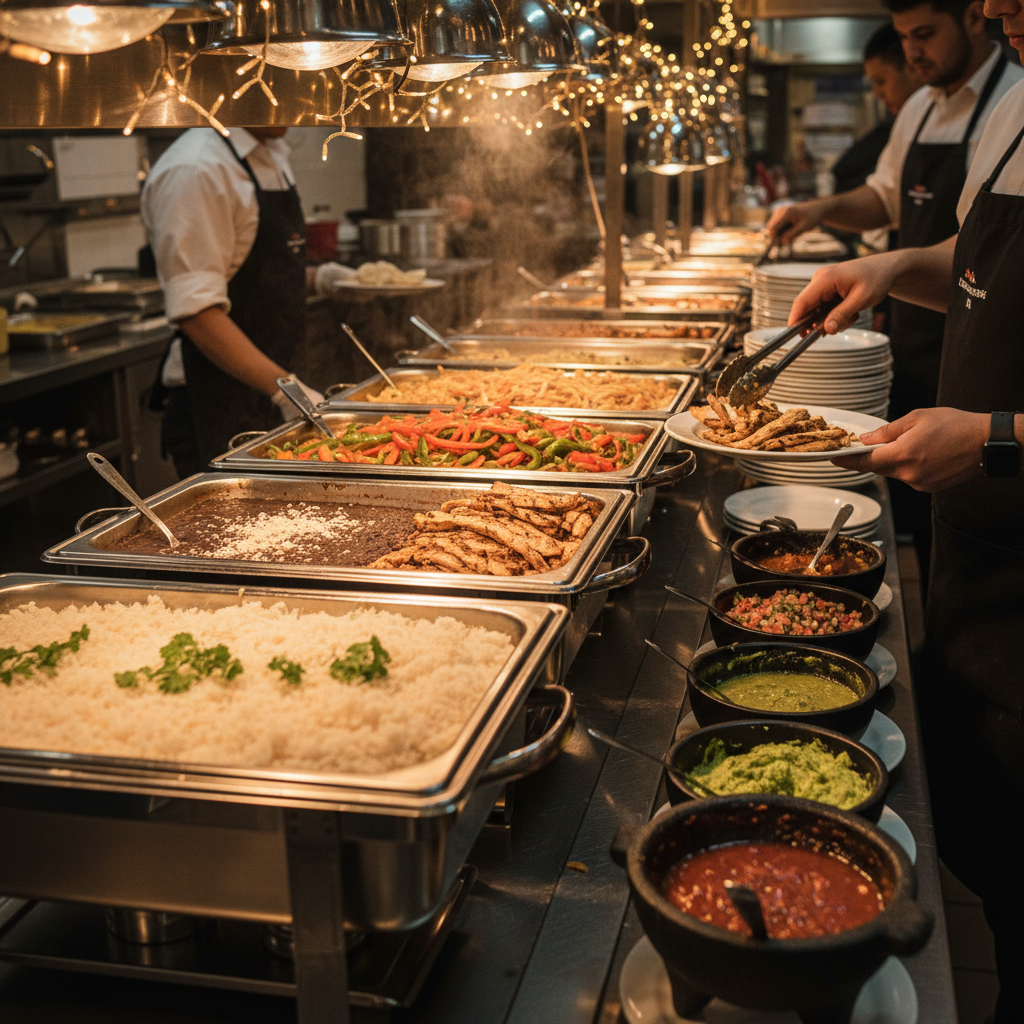
To see how we package and portion at scale, check our buffet-style catering overview.
Example 2: Family night takeout (2 adults, 2 kids)
- Proteins: Ground beef for the kids; chicken asado for bowls.
- Bases: Mix of tortillas and rice.
- Finishers: Mild pico, shredded lettuce, lime.
- Sauces: Serve crema on the side so everyone controls richness.
- Sides: Beans and grilled peppers/onions.
- Tip: Pack tortillas and slaw in separate sleeves so texture stays bright.
Example 3: Game-day fajita set (8 guests)
- Proteins: Carne asada and chicken asado.
- Bases: Warm flour tortillas in a foil pouch.
- Finishers: Fajita peppers/onions, pico, lime.
- Sauces: Queso and salsa verde in lidded cups.
- Sides: Rice and elote-style corn off the cob.
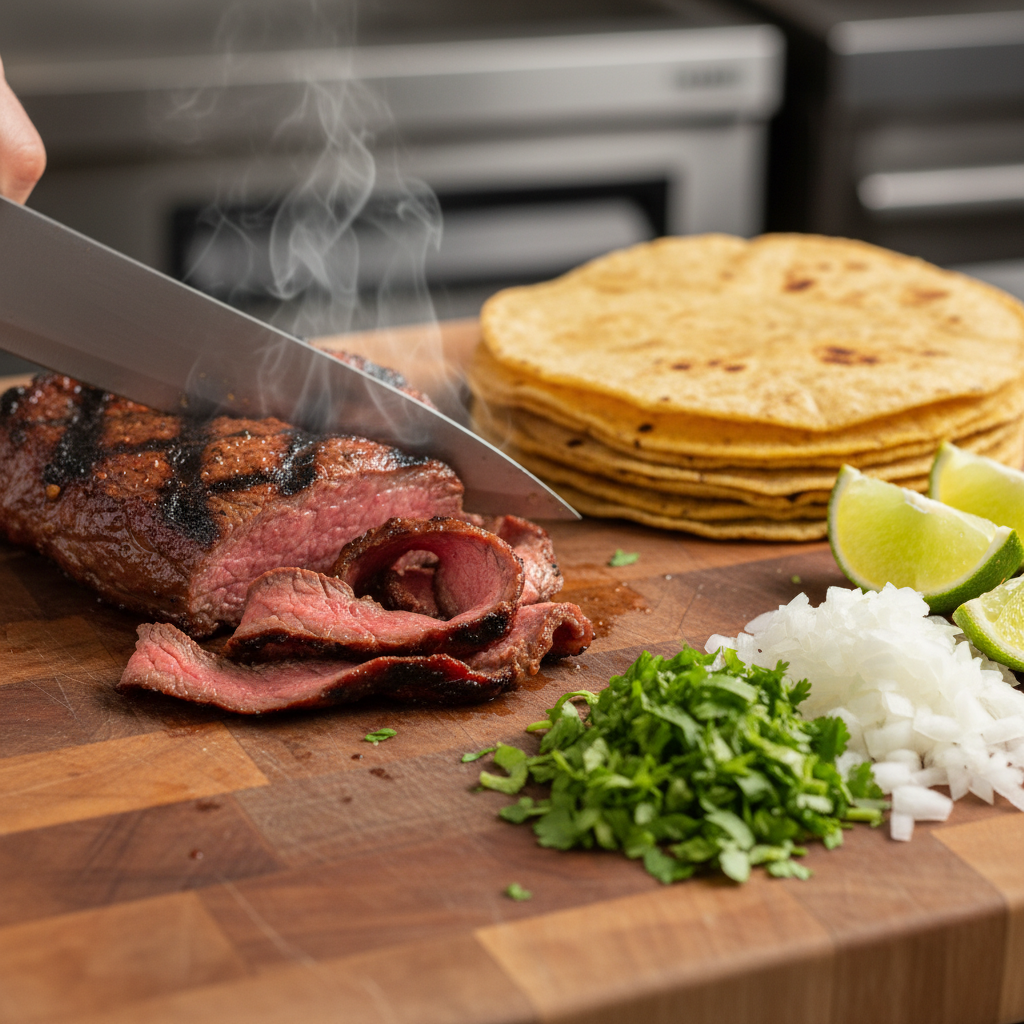
- Tip: Pre-slice proteins against the grain for easy assembly.
Example 4: Seafood-forward spread
- Hero: Rio’s shrimp tacos with citrus and slaw.
- Balance: Add a veggie bowl path with grilled squash and beans.
- Contrast: Salsa verde for brightness; a smoky roja for depth.
- See: Our shrimp quesadilla for a warm, melty seafood option.
Example 5: Classic comfort
- Hero: Ground beef tacos with cheese and mild pico.
- Balance: Add a chicken bowl with slaw and chipotle crema.
- Boost: Crispy chips and queso to round out the table.
- Explore: Our ground beef quesadilla for another family favorite.
Example 6: Vegetarian-first
- Hero: Grilled vegetable tacos with beans.
- Balance: A hearty rice bowl with salsa verde and citrus.
- Note: Corn tortillas and labeled toppings reduce guesswork for guests.
Example 7: Late-night snack line
- Format: Mini tacos with two sauces and limes.
- Travel: Ventilated boxes to keep tortillas from steaming.
- Tip: Keep fresh finishes separate until the moment of serving.
Example 8: Winter warm-up
- Hero: Chicken enchiladas with salsa roja.
- Balance: A citrus slaw on the side for crunch and brightness.
- See: Our enchilada lineup for combo ideas.
Example 9: Kids’ build
- Hero: Ground beef taco with cheese on flour tortilla.
- Sides: Rice and beans; mild pico on the side.
- Tip: Pack limes and hot sauces separately so adults can dial it up.
Example 10: Health-forward lunch
- Hero: Salad bowl with chicken asado, beans, and pico.
- Balance: Lime and salsa verde in lidded cups; queso optional.
- Note: Greens under warm protein keep texture while adding warmth.
Example 11: Neighborhood picnic
- Hero: A taco assortment that eats well outdoors.
- Balance: Chips, pico, and slaw in separate containers.
- Tip: Choose items that hold texture for the walk to the park.
Example 12: Day-long summit buffet
- Hero: Proteins rotated across sessions to keep interest high.
- Balance: Alternate sauces; keep a veggie-forward option constant.
- Tip: Refresh finishers hourly so color and crunch stay vivid.
Planning an event? Let’s align your menu.
Hosting in Toronto? Tell us your headcount, timing, and dietary mix. We’ll map a taco bar or buffet using the portion plan in this guide and confirm travel tests so your spread lands hot, colorful, and easy to serve.
Chat with our team about taco bars, fajita sets, or family packs. See how we scale service without sacrificing crunch or color on our taco bar catering page.
Frequently Asked Questions
These quick answers cover the questions we hear most about Mexican menu planning for dine-in, takeout, and catering. Each response keeps to the essentials so you can act fast and plan confidently.
How many tacos should I plan per adult?
Plan 3–4 tacos per adult with 1.5–2 ounces of cooked protein per taco. Offer a veggie route and a mild sauce so everyone has a safe, tasty option.
What travels best for takeout?
Bowls and fajita sets travel reliably. Keep slaw, chips, and fresh herbs separate. Vent containers for crispy items and seal saucy builds tightly to protect texture.
How do I plan for mixed dietary needs?
Create clear paths: corn tortillas and veggie proteins for gluten-friendly and vegetarian guests. Label sauces and toppings. Keep dairy as an optional add-on.
What’s a simple starter menu for a small group?
Pick two proteins (like chicken asado and ground beef), corn and flour tortillas, two fresh toppings, one red and one green salsa, plus rice and beans. It’s balanced, fast, and easy to scale.
How can I keep service fast during a lunch rush?
Standardize builds, pre-portion proteins, and use a simple three-step line: base, protein, finishers. Keep sauces in squeeze bottles and label heat levels clearly.
Wrap-Up and Next Steps
Keep it simple: a hero protein, a crisp counterpoint, and a signature sauce. Document portions and travel tests. With this playbook, you’ll serve faster and more consistently—whether it’s dine-in, takeout, or a full taco bar for a crowd.
Key takeaways
- Modular menus balance variety with speed; keep 2–3 proteins universal.
- Use straightforward portions to reduce waste and guesswork.
- Protect texture by separating hot and cold in takeout and catering.
- Label dietary paths so guests can order confidently.
- Test travel time to ensure crunch and color arrive intact.
Ready to plan your spread? Browse our ground beef tacos for comfort classics, our chicken asado tacos for a versatile hero, and seafood like Rio’s shrimp tacos when you want a bright, citrus-forward star.