Mexican Grill Catering vs Buffet: Pick the Best Fit (2026)
Mexican grill catering vs buffet: compare live taco bars to self-serve lines for Toronto events. See pros, cons, and a hybrid plan that keeps lines short.
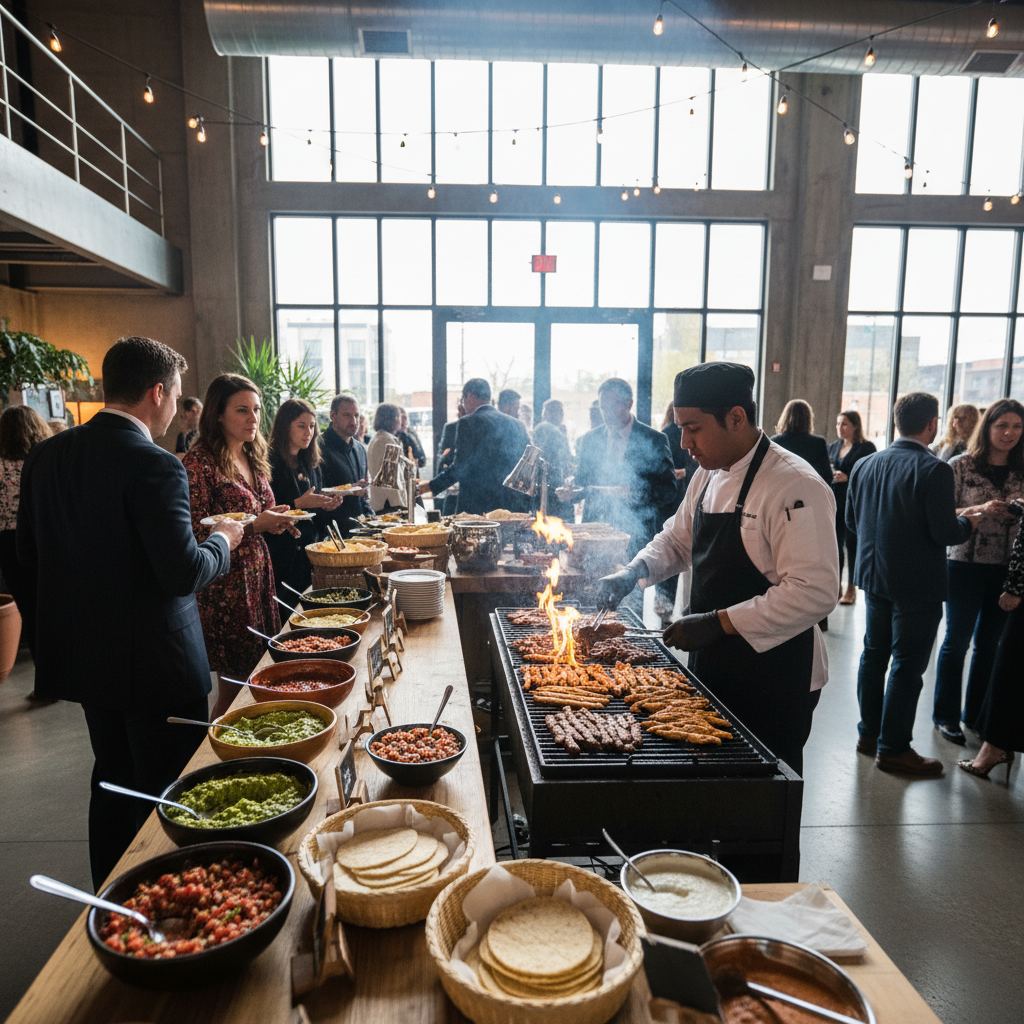
Mexican grill catering vs buffet refers to two event service styles: a live grill or taco bar with on-the-spot assembly, versus a self-serve buffet with chafers and platters. For events near 746 Queen Street West in Toronto, La Rio’s Mexican Grill provides dine-in, takeout, and catering. Choose based on guest flow, venue layout, dietary needs, and experience goals.
By Sam Patel • Founder, La Rio’s Mexican Grill
Last updated: 2026-05-06
Introduction
Mexican grill catering features a staffed taco bar and hot grill for fresh, customized plates, while buffet-style catering offers set platters guests serve themselves. Grill stations deliver theater and faster dietary customization; buffets excel at throughput and simplicity. The right choice depends on headcount, timing, venue constraints, and the vibe you want.
Here’s the thing: your service style shapes the entire guest experience. A sizzling plancha signals energy and interactivity; an elegant buffet communicates abundance and convenience. In Old Toronto’s mixed venues—from modern lofts to heritage halls—you’ll balance traffic flow, line length, and menu variety.
At La Rio’s Mexican Grill, our team supports three modes—dine-in, takeout, and full-service catering—so you can match service to your space and schedule. If you’re exploring both formats today, this guide will help you decide with confidence.
Quick Summary
Pick grill catering for live action, dietary flexibility, and made-to-order tacos. Choose a buffet for streamlined service, minimal staffing, and fast self-serve lines. In Old Toronto and the wider Toronto metro, venue access, elevator timing, and load-in rules often decide which style runs smoother.
- Best for energy: Live Mexican grill (taco bar) with on-site assembly
- Best for speed: Buffet-style with labeled chafing dishes
- Dietary wins: Grill station—clear separation for gluten-free, vegan, and halal
- Space-limited rooms: Buffet with a single, compact line
- Hybrid option: Small grill station + buffet sides to split lines
Quick Comparison Table
Use this side-by-side to compare service flow, staffing, dietary handling, and guest experience. Grill stations shine for customization and freshness; buffets win for throughput and simplicity. Consider venue access, line-management, and back-of-house constraints before locking in.
| Factor | Mexican Grill Catering (Taco Bar) | Buffet-Style Catering |
|---|---|---|
| Guest Experience | Interactive, made-to-order tacos; aroma and sizzle boost excitement | Abundant, self-serve variety; easy, casual, quick |
| Dietary Accommodations | High—separate pans, gloves, and tools on request; clear ingredient control | Moderate—requires strict labeling and line signage to avoid mix-ups |
| Service Throughput | Moderate—faster per guest when staffed well; queues form during peaks | High—multiple grab points speed traffic; fewer bottlenecks |
| Footprint & Layout | Requires grill station + cold/hot pans; needs ventilation consideration | Compact line with chafers; flexible in narrow rooms |
| Food Quality Window | Excellent—proteins seared on demand; tortillas warmed as served | Good—holds well when rotated; needs attentive replenishment |
| Staffing Intensity | Higher—grill cook(s) + assembly team | Lower—1–2 attendants to replenish and monitor |
| Line Management | Roped queue with clear menu boards; consider two identical lines | Stanchions and signage; split hot/cold to create more access points |
| Great For | Product launches, team celebrations, summer socials | Town halls, trainings, conferences with tight agendas |
For a deeper primer on layout and labeling when you lean buffet, see this buffet-style Mexican catering overview. If you’re aiming for a live taco bar feel, skim our taco bar catering in Toronto guide before you finalize your floor plan.
Our Top Pick
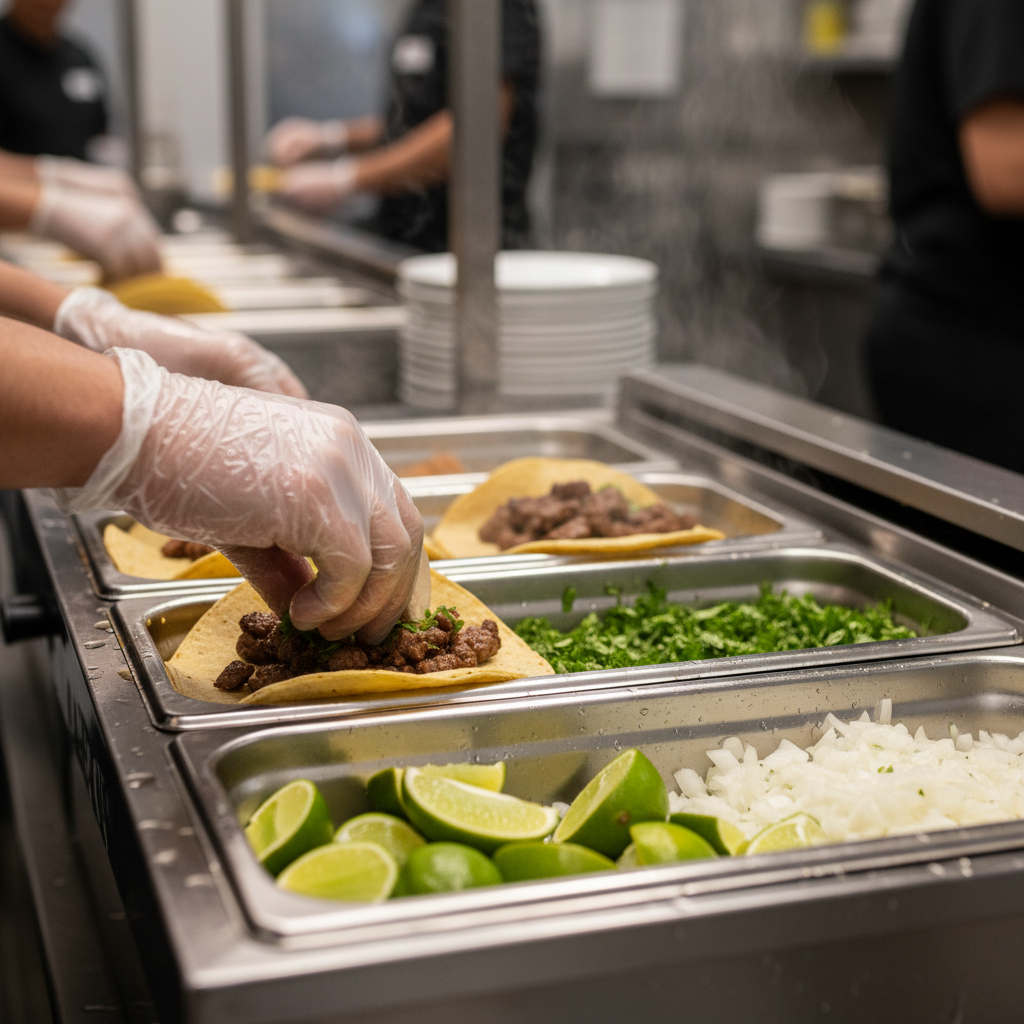
For most workplace and social events seeking energy and freshness, we recommend Mexican grill catering with a staffed taco bar. It delivers made-to-order plates, clearer allergen control, and a memorable experience. Pair it with a compact sides buffet to double throughput and keep lines moving.
Why we favor the grill-first approach: it’s both entertainment and service line. Guests talk to the cook, tweak toppings, and leave with hot food tailored to them. That conversation—"extra cilantro, light onions"—is part of the joy.
At La Rio’s, we design service to fit the room. If your venue has limited ventilation or tight elevator windows, we’ll switch to a plancha-lite setup or a hybrid format: a small live station for proteins, plus a streamlined buffet for rice, beans, and salads.
Planning a lunch-and-learn in a no-flame office? We pivot to an electric griddle and pre-seared proteins held safely. For outdoor summer socials, we expand the live grill to anchor the party energy.
Nine More Scenarios Compared (Entries #2–10)
Use these real-world scenarios to choose quickly. Match your event profile to the closest case and note which service usually wins. When in doubt, a hybrid—small grill station plus buffet sides—balances freshness with speed and space efficiency.
2) Training Day with Back-to-Back Sessions
- Goal: Feed large groups in 15-minute breaks without derailing the agenda.
- Pick: Buffet.
- Why: Multiple access points and clear labels minimize bottlenecks.
- Tip: Place beverages at a separate table to prevent traffic jams.
3) Product Launch or Media Event
- Goal: Create buzz and photo-friendly moments.
- Pick: Grill catering.
- Why: The sizzle, aroma, and made-to-order tacos deliver shareable moments.
- Tip: Add a salsa showcase to spark conversation.
4) Quarterly Town Hall in an Open Office
- Goal: Serve many employees fast with minimal setup.
- Pick: Buffet.
- Why: Compact footprint and quick resets between waves.
- Tip: Stagger department arrival windows to cut lines.
5) Team Celebration with Dietary Mix
- Goal: Keep vegan, halal, and gluten-free guests confident and happy.
- Pick: Grill catering.
- Why: Easier tool/pan separation and one-to-one customization.
- Tip: Position the vegan protein at the grill’s start to avoid cross-contact.
6) Outdoor Summer Social near Trinity Bellwoods Park
- Goal: Lean into a relaxed, street-fair vibe.
- Pick: Grill catering.
- Why: Live-fire feel and fresh tortillas set the tone.
- Tip: Watch wind direction when placing the grill; protect the tortilla warmer.
7) Hybrid In-Person + Virtual All-Hands
- Goal: Keep onsite staff fed while remote teammates get parity.
- Pick: Hybrid.
- Why: Onsite grill station for experience; send individually packaged meals to remote hubs.
- Tip: Align serving times with broadcast breaks to avoid noise bleed.
8) Formal Awards Night
- Goal: Keep a polished aesthetic without lines.
- Pick: Buffet or semi-plated.
- Why: Chafers and composed trays match the look; attendants manage portions.
- Tip: Use uplights and warmers hidden behind skirting.
9) Mini Offsite in a Tight Loft
- Goal: Serve 20–40 guests in limited square footage.
- Pick: Buffet.
- Why: One linear line beats a crowded grill corner.
- Tip: Push dessert and beverages to a satellite table.
10) Community Open House near Fort York National Historic Site
- Goal: Welcome walk-ins across several hours.
- Pick: Hybrid.
- Why: Grill for peak windows; buffet for steady off-peak flow.
- Tip: Keep a rotating hot-hold plan for proteins between waves.
How to Choose Between Grill Catering and Buffet
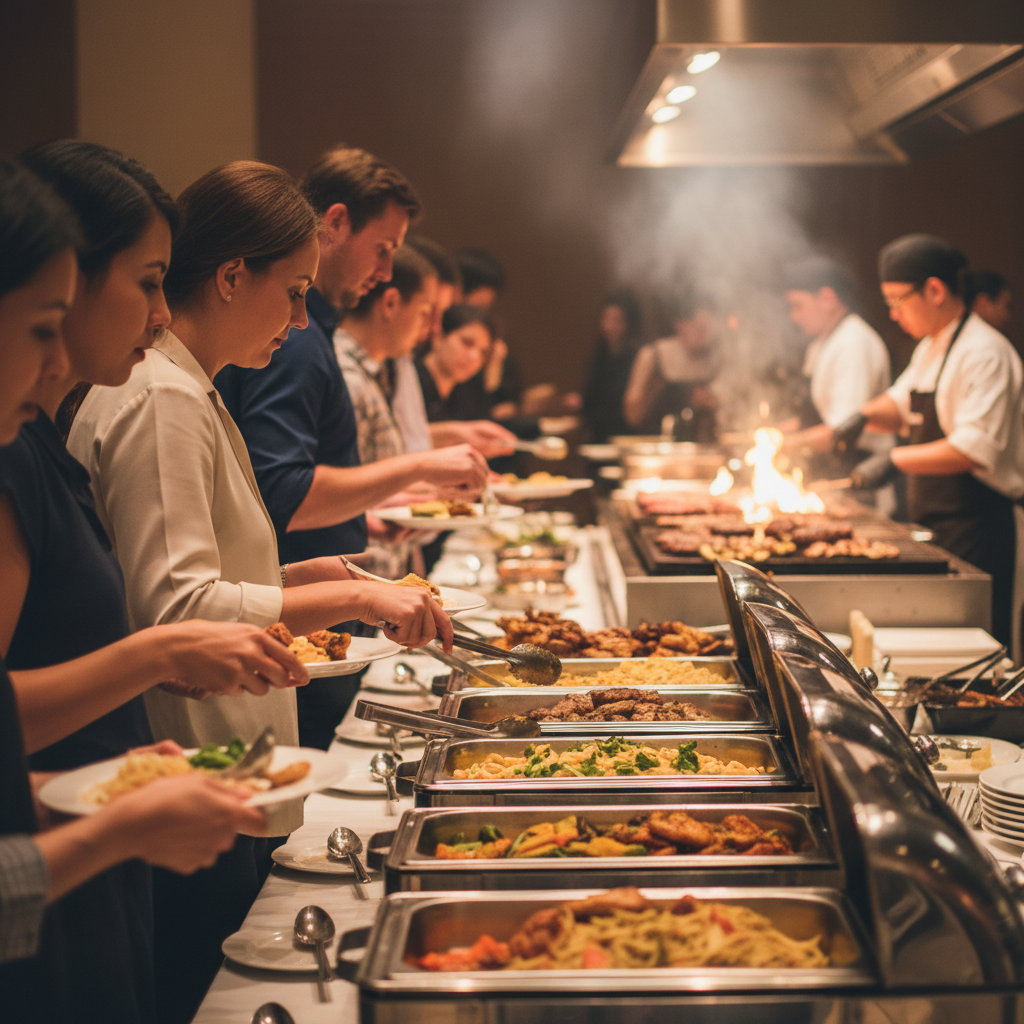
Decide by mapping your guest flow, venue access, dietary needs, and schedule. If customization and theater matter most, pick grill catering. If speed and simplicity matter most, pick a buffet. When these needs collide, a hybrid split-station plan balances both.
Five-step decision framework
- Define the vibe: Is your event celebratory and social, or focused and time-boxed?
- Map the room: Sketch entrances, aisles, and choke points; note where lines can form safely.
- Audit dietary needs: Count vegan, gluten-free, dairy-free, and halal needs; plan tool separation.
- Time the waves: Identify peak arrival windows; decide if you’ll batch guests or keep a rolling flow.
- Test the plan: Walk the path with two colleagues to simulate the lunch rush.
When working with clients in Toronto, we often recommend mirroring stations: two identical lines (or one grill + one buffet) to halve perceived wait times. Clear signage and an emcee or host pointing to “Line A” and “Line B” keeps momentum high.
Local considerations for Old Toronto
- Check building policies for live heat sources and elevator bookings; many heritage sites restrict flame and narrow load-in windows.
- Seasonality matters; winter coats slow lines, while summer patios near Trinity Bellwoods Park invite outdoor grill setups.
- Weekday traffic and parking near the core can compress setup time—pad your schedule for carts and freight access.
For broad planning context beyond Mexican cuisine, this corporate catering guide in Toronto outlines common staffing models and timeline checkpoints you can adapt to your event.
Buying Guide: Menu, Setup, and Food Safety
Build your plan around three pillars: menu composition, station setup, and food safety. Mix proteins, vegetables, and sides for balance; place stations to reduce crossing traffic; and use dedicated tools and labels to protect dietary needs and allergens.
Menu composition that works
- Two proteins + one veg star: Think grilled chicken and carne asada plus a hearty veggie like fajita peppers.
- Foundations: Warm tortillas, rice, beans, and a crunchy salad to round out plates.
- Signature salsas: Mild, medium, and a bright verde to please different heat levels.
- Texture play: Add pickled onions, lime wedges, and roasted corn for color and crunch.
Examples from our kitchen: the savory ground-beef quesadilla for heartier bites, bright shrimp tacos that pop at receptions, and our shrimp quesadillas for seafood-forward menus.
Station setup and flow
- Grill-first layout: Put the grill at the head, then warm tortillas, proteins, toppings, and salsas.
- Buffet-first layout: Start with cold salads and tortillas, then hot chafers; end with salsas and limes.
- Space-saving tip: Use two-sided lines where possible; it effectively doubles access without more tables.
Food handling and dietary confidence
- Tool discipline: Separate tongs and spoons per item; swap or sanitize at planned intervals.
- Label clearly: Mark vegan, gluten-free, and dairy-containing items at eye level.
- Cross-contact prevention: Keep allergen-heavy garnishes (e.g., crema, cheese) at the line’s end.
Bringing the family or team to our dining room instead? Explore our catering options or choose individually packaged catering for clean desk-side service.
Soft CTA: Plan your event with us
Tell us about your headcount, venue, and timing. We’ll sketch a grill, buffet, or hybrid that fits your space—and we’ll own the line management details. Start here: get a catering quote.
Frequently Asked Questions
Here are quick answers to common planner questions about Mexican grill catering vs buffet. These cover service flow, dietary handling, hybrid formats, and venue constraints in Old Toronto and the wider Toronto area.
Is a live taco grill slower than a buffet?
Not when staffed and laid out well. A single grill line can keep pace by mirroring stations or adding a compact sides buffet. Buffets move steadily because guests self-serve, but a well-run grill station surprises people with its throughput.
Which format handles dietary needs best?
A staffed grill usually wins. Cooks can change gloves, use dedicated tools, and assemble plates in a clean zone. Buffets handle diets well with strong labeling and separation, but guests may mix utensils without realizing it.
What if my venue restricts open flame?
We switch to electric griddles and hold proteins in hot pans, or go hybrid with a buffet for sides. Many Old Toronto buildings have rules about heat sources and elevator timing, so we tailor equipment and setup to comply.
Can I combine grill and buffet?
Yes. A compact grill station for proteins plus a buffet for sides shortens lines and maintains freshness. It’s our most recommended format for mid-size corporate and community events in Toronto.
Methodology
These recommendations draw on La Rio’s on-site experiences across Toronto plus venue constraints common in Old Toronto. We modeled line lengths, station spacing, and staffing patterns to suggest when grill, buffet, or hybrid formats perform best in real rooms—not just on paper.
- Venue audits: We note elevator size, load-in routes, and flame restrictions before proposing gear.
- Line simulations: We test one-line vs two-line flow, grill-first vs buffet-first, and signage impact.
- Dietary mapping: We build separate toolkits and label plans for vegan, gluten-free, and halal guests.
- Menu tests: We time protein sear/hold windows and tortilla warm cycles to protect texture.
If you’re leaning buffet and want quick refresher notes, review this short buffet-style guide. For a live, made-to-order approach, this taco bar overview outlines equipment and flow options you can adapt.
Conclusion & Key Takeaways
Choose grill catering when customization and showmanship matter; choose a buffet when speed and simplicity rule. In many Toronto venues, a hybrid earns the highest guest-satisfaction-to-setup ratio. Lock your choice by mapping room flow, dietary needs, and peak arrival windows.
- Grill = experience: Live assembly, great for varied diets, strong sensory impact.
- Buffet = efficiency: Compact footprint, fast lines, clear labels.
- Hybrid is flexible: Pair a small grill with a sides buffet to split queues.
- Room wins: Your layout and building rules often decide the “best” choice.
Ready to plan Mexican catering near Old Toronto? Tell us about your space, headcount, and timing—our team will recommend a grill, buffet, or hybrid plan that fits. Start your plan here: request a catering quote.