Mexican Grill Event Food Ideas: Build a Fun Spread (2026)
Plan Mexican grill event food ideas with taco, fajita, nacho, or bowl bars. Portion 5–6 oz per guest, add two sides and a salsa trio. Toronto-ready tips.
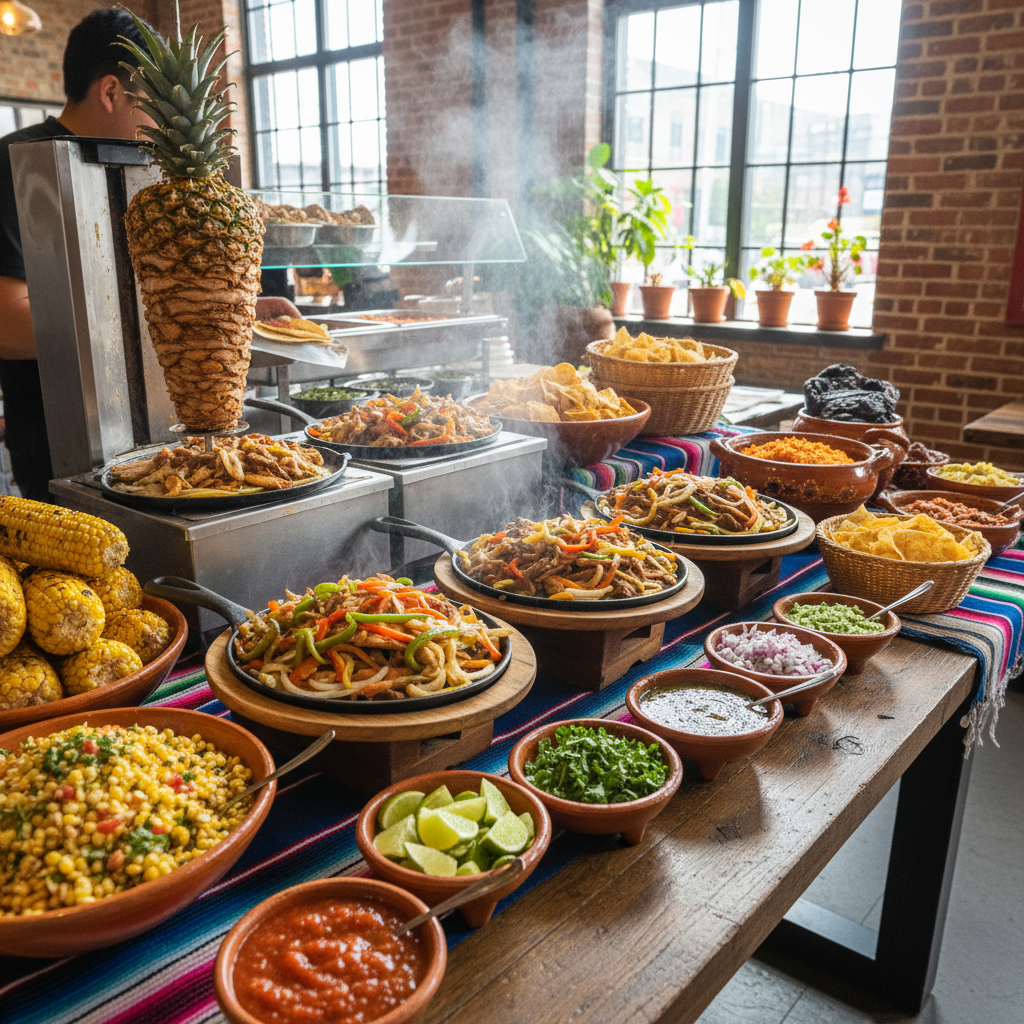
Mexican grill event food ideas are themed menus and serving setups that turn tacos, fajitas, bowls, and grilled sides into an easy, crowd-pleasing spread. At 746 Queen St W in Toronto, La Rio’s Mexican Grill supports dine-in, takeout, and catering, so you can host confidently with hot proteins, fresh salsas, and simple service styles that scale.
By Sam Patel — Founder, La Rio’s Mexican Grill
Last updated: 2026-05-14
Overview and Table of Contents
Plan a Mexican grill spread by choosing a service style (taco, fajita, nacho, or bowl bar), locking in proteins and sides, and sizing portions to 2–3 tacos or 5–6 ounces of protein per guest. Schedule prep in phases, use insulated carriers, and assign one server per 25–30 guests for smooth flow.
Use this complete, practical guide to design your menu, estimate quantities, and map logistics from kitchen to event. We’ll anchor examples in Old Toronto, where our team supports dine-in, takeout, and catering requests daily.
- What Is a Mexican Grill Event Spread?
- Why Mexican Grill Works for Events
- How to Plan Your Menu and Quantities
- Stations and Approaches (Tacos, Fajitas, Nachos, Bowls)
- Best Practices: Prep, Safety, and Transport
- Tools, Timelines, and Resources
- Case Studies and Real Examples
- Local Planning in Old Toronto
- Frequently Asked Questions
- Conclusion and Next Steps
What Is a Mexican Grill Event Spread?
A Mexican grill event spread is a curated selection of grilled proteins, fresh toppings, warm tortillas, and sides arranged for fast self-serve or staffed service. It emphasizes hot-hold reliability, flavor variety, and easy customization, so diverse groups can eat well without complex plating or long lines.
At La Rio’s Mexican Grill, “event spread” means real-grill techniques, travel-ready packaging, and a station layout that keeps food hot and guests moving. You’ll combine a main station (like a taco or fajita bar) with sides and salsas that hold well for 60–120 minutes.
Core components you’ll include
- Grilled mains: chicken asado, carne asada, al pastor-style pork, or tofu sofritas.
- Warm carriers: soft corn or flour tortillas; tortilla chips for nachos.
- Fresh toppers: pico de gallo, shredded lettuce, cilantro, onions, limes, crema.
- Sides that travel: Mexican rice, charro or black beans, elote or esquites, grilled veggies.
- Heat + serveware: chafing sets, fuel, insulated carriers, serving tongs, ladles.
In our experience, the sweet spot for mixed groups is two proteins, three salsas, and two sides. That mix delivers contrast and keeps setup simple for teams and families.
Why Mexican Grill Works for Events
Mexican grill menus excel for events because they scale, travel, and satisfy varied diets. Grilled proteins stay juicy in hot-hold gear, toppings add freshness, and guests customize plates in seconds—cutting waste and keeping lines short during peak service windows.
From office lunches to backyard celebrations, these menus hit proven event metrics: fast throughput, high satisfaction, and low leftover rates. Self-serve stations move 100 people in roughly 20–30 minutes when placed well, with utensils pre-staged and proteins pre-sliced.
Benefits you can bank on
- Speed: Assembly takes 20–30 seconds per person; that’s 120–180 people per hour per line.
- Diet-friendly: Clear meat/veg, dairy/plant, and mild/spicy pathways.
- Waste control: Guests choose portions; sides like rice/beans buffer appetite swings.
- Reliability: Grilled chicken and steak hold texture better than many sauced dishes.
We see this every week in Toronto: teams want bold flavor, quick service, and options that feel fresh. A Mexican grill format checks those boxes without chef-attended carving stations or fragile canapés.
How to Plan Your Menu and Quantities
Anchor your count to 2–3 tacos or 5–6 ounces of protein per guest, plus two sides and three salsas. Add 10% buffer for hearty eaters, and split proteins 60/40 between most‑popular and alternate picks. Pre-label toppings for dietary clarity and faster flow.
Quantities matter more than recipes at events. Keep it simple, predictable, and scalable. Here’s a reliable playbook we use for neighborhood events and office catering.
Per-person planning benchmarks
- Protein: 5–6 oz cooked weight (about 2–3 tacos or one fajita plate).
- Tortillas: 3 small corn or 2 medium flour per guest.
- Rice + beans: 4–6 oz combined per guest.
- Chips: 1–1.5 oz per guest for nachos or dipping.
- Salsa trio: mild, medium, and a roasted or verde option; plan ~1.5–2 oz per person total.
Menu mix templates that work
- Classic crowd-pleaser: chicken asado + carne asada, rice, black beans, pico, salsa roja, crema, lettuce, lime.
- Balanced + veg-forward: chicken asado + tofu sofritas, arroz rojo, charro beans, roasted corn, salsa verde, pickled onions.
- Big flavors: al pastor-style pork + carne asada, esquites, rice, guacamole, salsa morita, cilantro-onion.
Need help choosing mains? Review our curated options on the chicken asado tacos, ground beef tacos, and tofu sofritas quesadilla pages to align portioning and toppings.
Stations and Approaches (Tacos, Fajitas, Nachos, Bowls)
Choose one anchor station—taco bar, fajita bar, nacho bar, or bowls—and add one satellite (chips and salsa, elote, or dessert). One line serves 120–180 guests per hour. Keep proteins pre-sliced, tortillas warm, and salsas front-and-center for speed.
Station design shapes guest experience and line flow. Pick the anchor that best fits your audience and venue, then layer sides to round out the plate.
Taco bar (most flexible)
- How it flows: warm tortillas first, proteins, then toppings.
- Best for: mixed groups; easy gluten-friendly pathways with corn tortillas.
- Pro tip: Stage a staffer at tortillas to guide pace and portion sizes.
Fajita bar (satisfying, hearty)
- How it flows: flour tortillas, sizzling peppers/onions, sliced chicken or steak, toppings.
- Best for: colder days or evening events; higher perceived “meal” factor.
- Pro tip: Keep peppers/onions in shallow pans to maintain snap.
Nacho bar (fun, snack‑to‑meal)
- How it flows: chips, protein/beans/queso, salsas and fresh toppers.
- Best for: watch parties and open houses; kids love this path.
- Pro tip: Offer small boats to prevent chip breakage and speed movement.
Bowl bar (clean + dietary‑friendly)
- How it flows: rice/greens base, protein, beans, corn, salsa, lime.
- Best for: offices with mixed dietary needs; easy dairy/ gluten avoidance.
- Pro tip: Add roasted veggies for color and a vegetarian mainstay.
For menu inspiration and layouts, browse our in‑house quesadilla and chicken asado quesadilla offerings. They pair naturally with a taco or fajita anchor.
Best Practices: Prep, Safety, and Transport
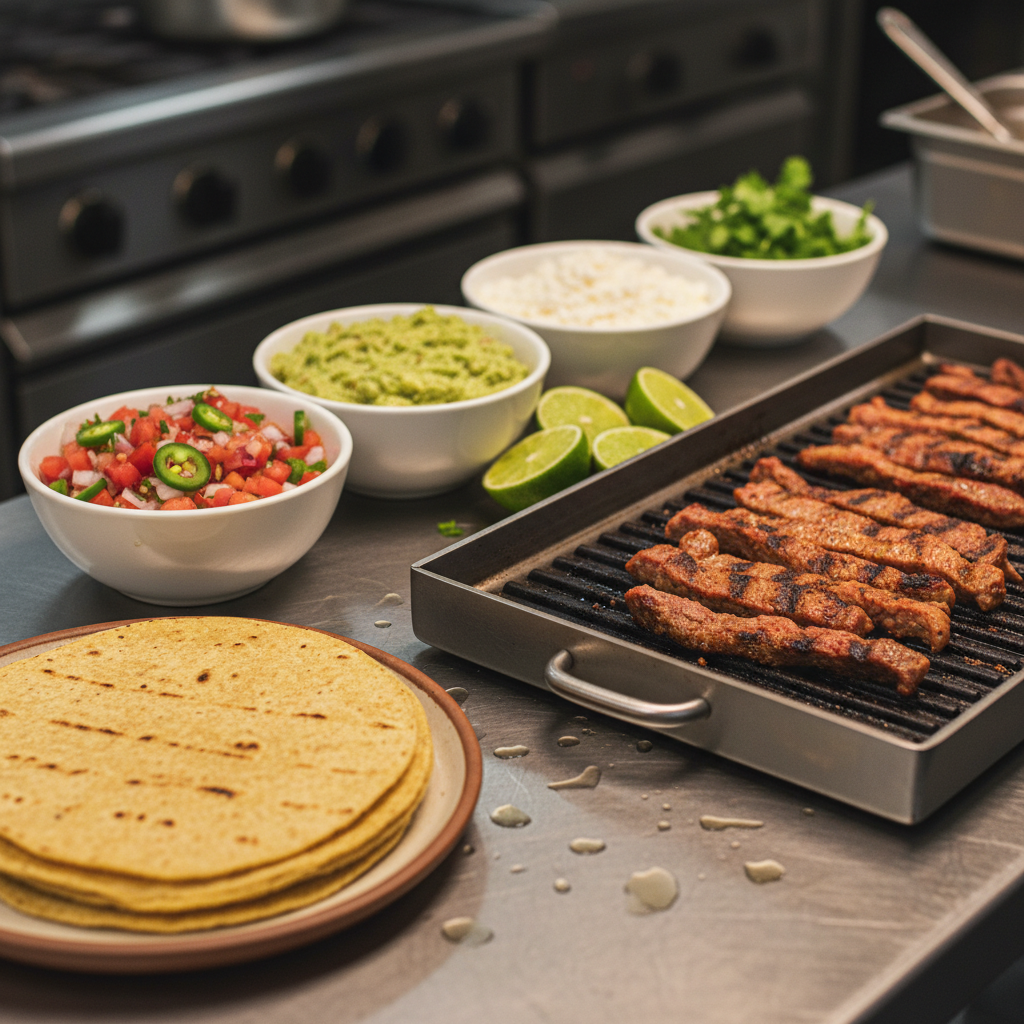
Batch proteins, pre‑cut garnishes, and hot‑hold above 140°F. Label dairy, gluten, and spicy items. Use insulated carriers for 30–60 minute travel and re‑check temps on arrival. Assign one attendant per 25–30 guests to restock and answer dietary questions.
Great events are built on prep discipline. Use time windows and portion targets so the whole team can see progress at a glance.
Prep timeline we trust
- T‑48 to T‑24 hours: marinate proteins; prep salsas; portion rice/beans pans; print labels.
- T‑6 hours: cook beans/rice; roast vegetables; pre‑slice citrus and onions.
- T‑2 hours: grill proteins; hold hot; pack carriers; stage chafers and utensils.
- On site: re‑check temps; light fuel; set line in 12–15 minutes; label items.
Food safety and clarity
- Hot hold: aim for 140–160°F in chafer pans; swap shallow pans more often.
- Cold hold: keep guacamole and crema in small, chilled inserts; refresh every 30–45 minutes.
- Allergen signs: call out dairy, gluten, sesame, and nuts where relevant.
- Cross‑contact: separate tongs for each protein; dedicate veg‑only tools.
If you prefer a staffed setup, a single attendant can manage a 6–8‑foot station for 25–30 guests, freeing hosts to greet and enjoy the event.
Tools, Timelines, and Resources
Use a one‑page plan: headcount, menu, service style, roles, timeline, and map. Pack chafers, fuel, insulated carriers, squeeze bottles, and labels. Keep a 10% food buffer and a 15‑minute restock cycle. Photograph the line once set—photos speed resets during service.
We standardize tools so any host or office manager can run a clean, reliable service.
Checklist essentials
- Service: chafers, fuel cans, water pans, lighters, serving tongs/ladles, gloves.
- Transport: insulated carriers, sheet pans with lids, anti‑spill containers.
- Setup: tablecloths, risers, menu cards, item labels, trash and recycle bins.
- Guestware: plates, boats, forks/spoons, napkins, 12–16 oz cups.
Timeline template
- T‑14 days: lock headcount range; choose station style.
- T‑7 days: confirm proteins and sides; note dietary needs.
- T‑72 hours: finalize headcount; print labels; schedule pickup or delivery.
- Event day: follow the prep windows above and photograph final setup.
If you want layout ideas, this third‑party gallery of Latin/Mexican options offers visual prompts similar to our spreads on a neutral site like this Mexican/Latin menu.
| Service Style | Best For | Throughput | Diet Flexibility | Notes |
|---|---|---|---|---|
| Taco Bar | Mixed groups, casual vibes | 120–180 guests/hour per line | High (corn tortillas, veg paths) | Keep tortillas hottest to speed assembly |
| Fajita Bar | Hearty meals, evening service | 100–150 guests/hour | Medium (flour tortillas common) | Shallow pans keep peppers crisp |
| Nacho Bar | Social mingling, game days | 150–200 guests/hour | High (build-to-taste) | Use boats to prevent soggy chips |
| Bowl Bar | Offices, dietary clarity | 120–160 guests/hour | Very high (no tortilla needed) | Add roasted veggies for color + fiber |
Want a done-for-you setup? Our team can stage a taco or fajita line, label all items, and brief your host in five minutes. Explore our in‑house options like a Toronto‑ready taco bar catering setup and we’ll tailor it to your venue.
Case Studies and Real Examples
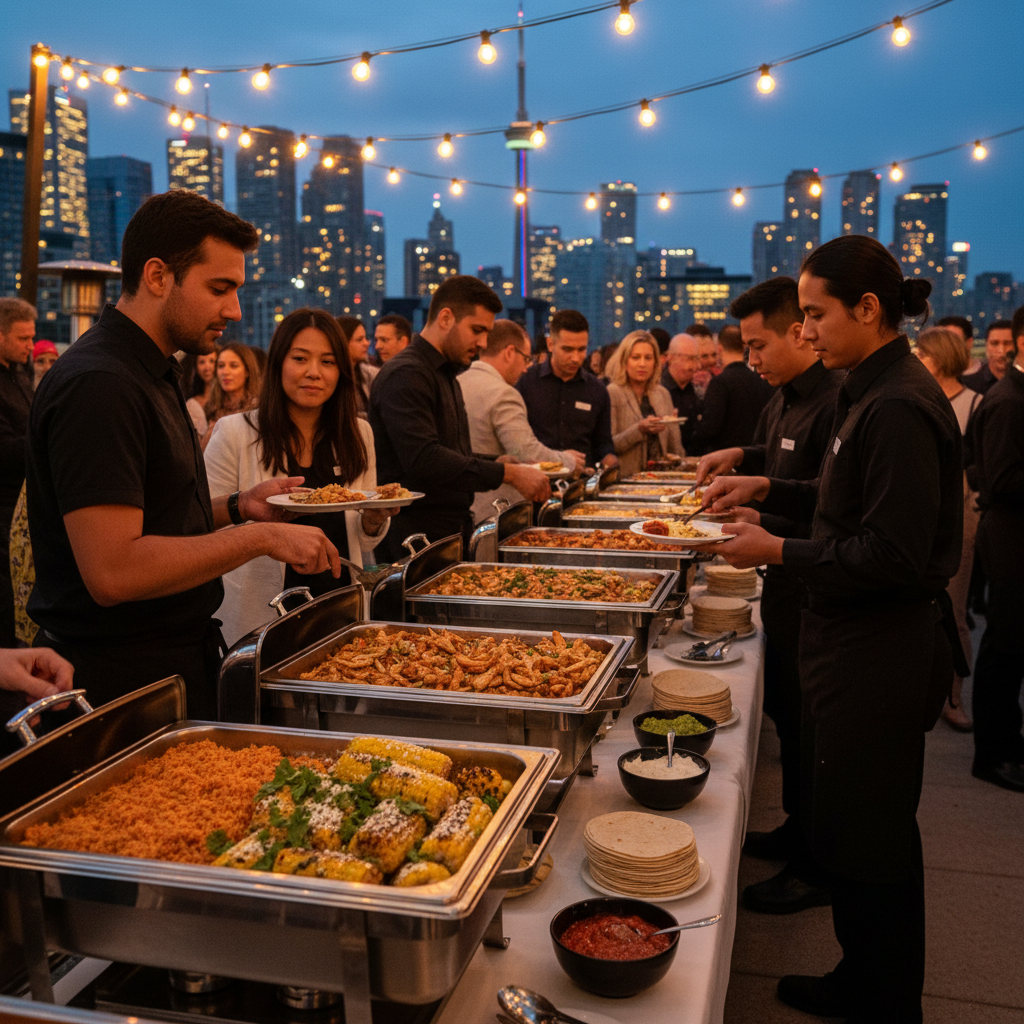
Use real-world mixes to de‑risk decisions: two proteins, three salsas, two sides, and labeled toppings. Plan 5–6 ounces of protein per person and one line per 120–150 guests. These Toronto scenarios show how station choices change flow, waste, and guest satisfaction.
Here are four snapshots from events our format is designed to support around Toronto’s core. They illustrate mix, layout, and timing choices you can borrow.
Team lunch, 40 guests (office)
- Anchor: taco bar with chicken asado + tofu sofritas.
- Sides: arroz rojo, black beans; chips + salsa trio.
- Flow: one 8‑foot line; served in 18 minutes; minimal leftovers.
- Tip: pre‑label dairy on crema and queso to speed choices.
Birthday gathering, 30 guests (home)
- Anchor: nacho bar + mini fajita add‑on.
- Sides: esquites cups and lime wedges.
- Flow: two shorter lines; kids gravitate to nachos, adults to fajitas.
- Tip: staffer rotates pans every 20 minutes to keep chips crisp.
Community meetup, 120 guests (venue)
- Anchor: dual taco lines with chicken asado + carne asada.
- Sides: rice, charro beans, roasted peppers/onions.
- Flow: two lines; 100% served in 25 minutes; steady restocks every 12–15 minutes.
- Tip: put limes and cilantro-onion early to prevent clogs at the end.
Outdoor meetup near the park
- Anchor: bowl bar for wind resistance; pre‑portioned greens/rice bases.
- Sides: grilled corn cut from cob; pico, salsa verde, pickled onions.
- Flow: one line; 90 guests in 30 minutes; minimal waste, easy cleanup.
- Tip: use lids as windshields and extra weights for tablecloths.
For exact pairings, review our menu items like ground beef tacos alongside vegetarian anchors such as tofu sofritas quesadillas to keep every path covered.
Local Planning in Old Toronto
Hosting in Old Toronto? Plan for short travel times from Queen Street West, quick load‑ins, and compact table footprints. The neighborhood’s walkability and mixed venues reward simple taco or bowl bars that set in 12–15 minutes and serve 120+ guests per hour.
Our home base is 746 Queen St W in Old Toronto, so we plan with the area’s constraints and advantages in mind.
Local considerations for Old Toronto
- For park gatherings near Trinity Bellwoods Park, choose bowl bars or pre‑portioned tacos to handle wind and uneven ground.
- Summer weekends are lively; set earlier pickups and expect more foot traffic around late afternoon.
- Historic venues and condos may have tight elevators; pack in shallow pans and bring extra risers.
If you want a staffed station nearby, our team can stage, label, and hand off in minutes. For visual ideas similar to our spreads, browse a neutral gallery such as this Mexican/Latin menu board and then adapt it to your headcount and space.
Menu Ideas and Pairings That Always Work
Pair two mains with a salsa trio and two sides. Balance heat and texture: one bright, one smoky salsa; one creamy, one crunchy topping. Keep guacamole in small bowls, refill often, and rotate shallow pans every 12–15 minutes for consistent heat and freshness.
These mixes are battle‑tested for workplace lunches and family celebrations. They deliver variety without sprawling prep lists.
- Comfort combo: chicken asado + ground beef; rice, black beans; pico, crema, shredded lettuce.
- Fresh + smoky: carne asada + roasted peppers/onions; salsa verde + roasted morita; cilantro-onion, lime.
- Veg-forward: tofu sofritas + grilled corn; charro beans; cabbage slaw; pickled onions; salsa verde.
- Game-day nachos: chips, ground beef or black beans, queso, salsa roja, jalapeños, crema.
Explore item details to match toppings and yields: see chicken asado tacos and our ground beef quesadilla for hearty pairings that hold well.
How to Choose Pickup, Delivery, or Staffed Service
Choose pickup for small groups and short travel. Select delivery when timing is tight or parking is limited. Opt for staffed service when guest count exceeds 50, venue access is tricky, or you want guaranteed line pacing and replenishment.
Service mode shapes the risk you take on, not just convenience. Here’s how we help hosts decide.
- Pickup: fastest handoff; ideal for 10–30 guests; you control set time.
- Delivery: best for 30–80 guests or tight schedules; we confirm arrival windows and bring to the door.
- Staffed station: best above 50 guests or multi‑room venues; we set, label, pace, and restock.
Want a sample layout? Review a public outline for a taco bar catering setup and sketch where your line will live relative to entrances and trash stations.
Troubleshooting and Pro Tips
Keep tortillas hottest, proteins pre‑sliced, and lines short. Pre‑label everything, put forks last, and place limes early in the line. Refresh shallow pans every 12–15 minutes and photograph the setup before doors open to guide quick resets.
We’ve found small adjustments can cut wait times by 20–30% without changing the menu.
- Line design: separate tortillas from chips to avoid cross‑traffic.
- Heat management: smaller, shallower pans reheat faster and stay consistent.
- Diet signage: use green dots for veg/vegan, blue for dairy, red for spicy.
- Cleanup flow: position trash/recycle where guests exit the line.
For a buffet‑style framework that resembles our stationing, review this outline for buffet-style Mexican catering and adapt it to your space.
Bringing It All Together
Lock your headcount, pick one anchor station, and stock the essential tools. Use the 5–6 ounce protein benchmark, two sides, and a salsa trio. Photograph the line once set and refresh shallow pans on a 12–15‑minute cadence to keep quality high from first plate to last.
These choices compress decision‑making and increase reliability for teams and families. The goal isn’t culinary complexity—it’s smooth, memorable service with food people love.
Frequently Asked Questions
How much Mexican grill food should I plan per person?
Plan for 2–3 tacos or about 5–6 ounces of cooked protein per guest, plus 4–6 ounces of rice and beans combined. Include three salsas so everyone finds a heat level they like. Add a 10% buffer for hearty appetites or late arrivals.
What Mexican grill dishes travel and hold heat best?
Sliced chicken asado, carne asada, and black or charro beans hold very well in chafing pans. Keep tortillas hottest, use shallow pans for faster refreshes, and rotate salsas in smaller bowls to maintain freshness through service.
How do you handle dietary restrictions at events?
Design clear paths: a vegetarian or vegan main (like tofu sofritas), corn tortillas for gluten-sensitive guests, and dairy on the side. Label common allergens and dedicate utensils for each protein and for vegetarian items to avoid cross-contact.
When should I choose pickup versus staffed service?
Pickup is ideal for small groups nearby with flexible start times. Select delivery for mid-size groups or tight schedules. Choose staffed service above 50 guests or when the venue is complex—staff manage pace, labeling, and restocks so lines stay short.
Conclusion and Next Steps
Choose one anchor station, size portions to 5–6 ounces per person, and keep tortillas hottest. Label everything, refresh shallow pans every 12–15 minutes, and assign an attendant for groups over 50. These steps create reliable, high‑satisfaction Mexican grill events.
- Key Takeaways
- Anchor with tacos, fajitas, nachos, or bowls; add two sides and a salsa trio.
- Plan 2–3 tacos or 5–6 oz protein per guest with a 10% buffer.
- Photograph the line and refresh shallow pans on a steady cadence.
- Next steps
- Sketch your line using our public taco bar outline.
- Lock your headcount and pick two mains from chicken asado, ground beef, or tofu sofritas.
- If you’re nearby in Old Toronto, swing by Queen Street West and we’ll help map the flow.
Ready to host? If you’re planning in Toronto, we can stage a reliable station and hand off a high‑performing spread that fits your venue.