Mexican Grill Meal Planning: Serve Fresh Plates Fast (2026)
Plan Mexican grill meal planning for events in Old Toronto with portion guides, service styles, and a 10-day timeline. Keep lines moving and plates hot.
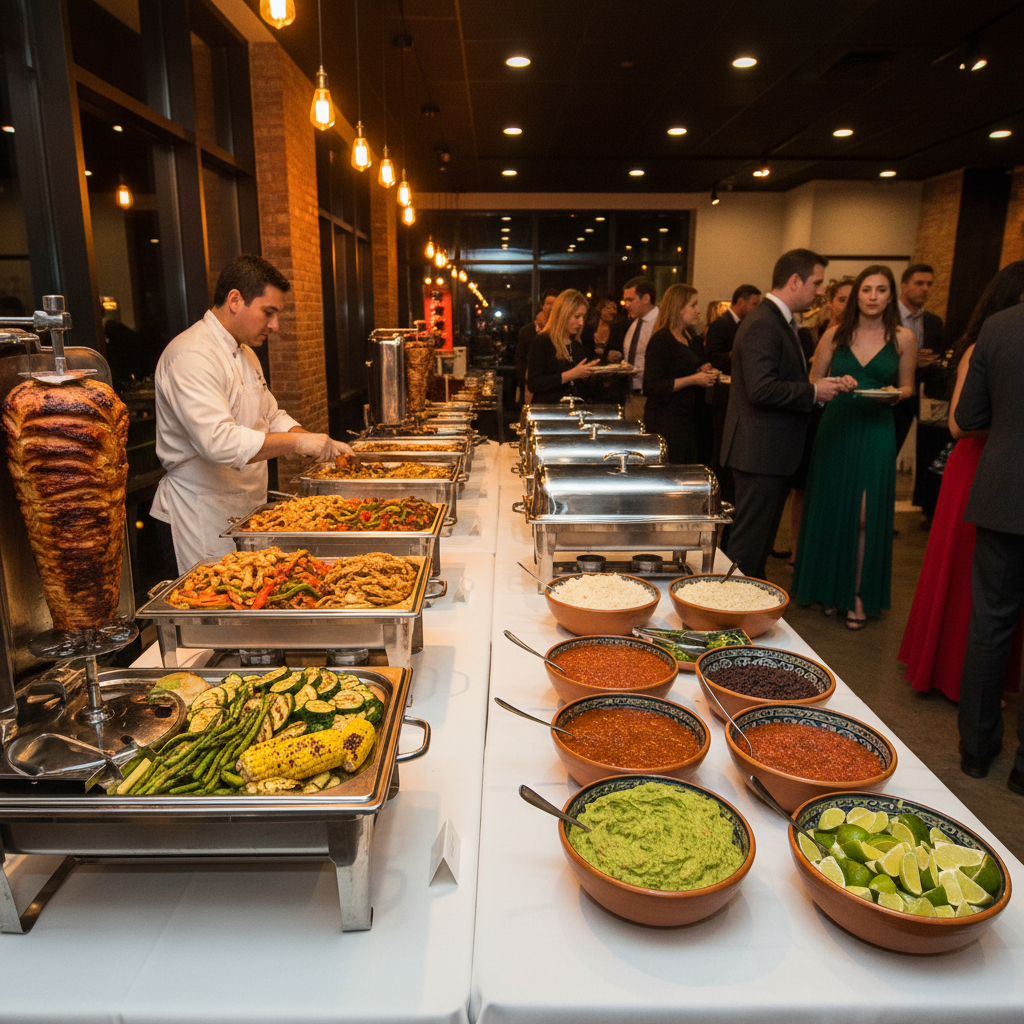
Mexican grill meal planning for events is the end-to-end process of sizing portions, choosing a menu, and coordinating service so every guest eats hot, fresh plates. At La Rio’s Mexican Grill in Old Toronto (746 Queen Street West), we tailor taco bars, fajita spreads, and bowls to your headcount, timeline, and venue so service runs smoothly.
By Sam Patel — Founder, La Rio’s Mexican Grill
Last updated: May 6, 2026
At a Glance
Plan a Mexican grill event by locking headcount, choosing a service style, and building a balanced menu with proteins, sides, and salsas. Schedule delivery 30–60 minutes before service, stage hot and cold stations, and assign roles. Use portion guides to prevent shortages and keep food above 140°F or chilled at 40°F.
This overview gives you the short version before we dive deep. If you need a hand today, our catering team can coordinate drop-off taco bars, staffed stations, or individually packaged meals that fit your schedule, space, and dietary needs.
- Lock your guest count in tiers (increments of 10) to size portions confidently.
- Pick a service style that fits your venue: drop-off, taco station, boxed meals, or full-service.
- Balance proteins (chicken, steak, veggie) with sides (rice, beans, salads) and fresh toppings.
- Stage hot holding and cold holding with clear guest flow and labeled stations.
- Use a task timeline: order confirmation, venue map, delivery window, and cleanup plan.
What Is Mexican Grill Meal Planning for Events?
Mexican grill meal planning for events is designing a complete taco, fajita, or bowl experience around your headcount, venue constraints, and dietary needs. It aligns menu selection, portioning, logistics, and staffing into a timeline so food arrives hot, stations flow, and guests eat within 10–15 minutes of joining the line.
Think of it as your blueprint for a stress-free service. You’ll map who eats what, how much food to prep, and where each station lives. Then you’ll match it to your event goals—speed for working lunches, variety for parties, or sealed portions for training days.
- Menu design: tacos al pastor, chicken tinga, carne asada, or veggie fajitas with salsas.
- Portioning: simple per-guest counts prevent over-ordering and shortages.
- Logistics: delivery window, table layout, and guest flow arrows on a floor plan.
- Staffing: from self-serve buffets to attended taco stations that speed lines.
In our experience, the most common pain point is uncertainty—“How much do we need?” Clear per-person guides fix that in minutes and keep your budget tight without skimping on quality.
Why It Matters in Old Toronto
Planning matters in Old Toronto because venues vary, traffic windows are tight, and guest preferences are diverse. A solid plan ensures hot, on-time delivery, smooth lines, and inclusive options near Trinity Bellwoods Park or Fort York National Historic Site without over-ordering or scrambling for last-minute add-ons.
Old Toronto events range from condo lounges to gallery openings. Elevators, loading zones, and shared amenities can compress set-up time. Add in mixed diets—vegan, gluten-friendly, or dairy-light—and planning becomes the difference between lines that crawl and service that sings.
- Urban logistics: reserve freight elevators, allow buffer for downtown traffic.
- Inclusive menus: build in plant-based proteins plus gluten-friendly tortillas.
- Compact layouts: straight-line buffets, not U-shapes, improve flow in small rooms.
- Service window: target a 30–45 minute peak service, then replenish in waves.
Local considerations for Old Toronto
- When hosting near Trinity Bellwoods Park, plan a covered staging area and bring extra ice packs for salads during warm months.
- Holiday weeks and summer patios increase traffic; add 15–20 minutes to your delivery window buffer to protect service time.
- For heritage venues close to Fort York National Historic Site, confirm table sizes and power access in advance; bring extension cords for warmers.
How Mexican Grill Meal Planning Works (Step-by-Step)
Start with the headcount, venue constraints, and service time. Choose service style, finalize a menu with at least two proteins and one vegetarian option, confirm dietary notes, map the station layout, and lock the delivery window. Stage hot and cold holding, assign roles, and open the line right on time.
Step-by-step workflow
- Scope your event: headcount tiers (e.g., 30, 50, 75), service start time, room access.
- Select service style: drop-off buffet, staffed taco station, boxed meals, or full-service.
- Build the menu: 2–3 proteins, 2 sides, salads, salsas, tortillas, toppings.
- Capture dietary needs: vegan, dairy-free, nut-free preferences.
- Confirm logistics: delivery window, elevator, loading, and table count.
- Map the layout: entrance → plates → proteins → sides → toppings → napkins → beverages.
- Stage holding: hot chafers above 140°F; salads chilled with ice beneath 40°F.
- Assign roles: line guide, replenisher, trash and compost monitor.
- Open the line: aim for a 10–15 minute pass-through time at peak.
- Reset and close: replenish proteins in waves; secure leftovers responsibly.
For staffed taco bars, we recommend a two-sided line once you’re past ~40 guests. That simple shift can cut perceived wait time in half and keeps lunch-and-learns on schedule.
Service Styles Compared
Choose a service style that matches space and speed: drop-off buffets are simple, taco stations add theater and portion control, boxed meals maximize convenience, and full-service handles everything. Match style to headcount, room flow, and whether you need on-site support or a quick set-and-serve.
| Service style | Best for | Staffing need | Key equipment | Timing guidance |
|---|---|---|---|---|
| Drop-off buffet | Offices, casual parties, quick setup | Self-serve | Chafers, serving utensils, labels | Deliver 30–45 min before service |
| Staffed taco station | Weddings, fundraisers, speed + theater | 1–2 attendants per line | Griddle or warmers, sneeze guards | On-site 60–90 min before service |
| Individually boxed meals | Trainings, exams, off-site field crews | Self-serve distribution | Labeled boxes, dietary color-coding | Drop 15–30 min before break |
| Full-service catering | Formal events, VIP groups | Chef + attendants | Complete kit: warmers, risers, decor | Arrive 90+ min before service |
To match style with your event, explore our catering overview or see options for a boxed meal program when your agenda demands sealed portions and quick distribution.
Menu Building Fundamentals
Balance flavor, texture, and diet coverage. Offer 2–3 proteins, at least one vegetarian or vegan option, two sides, fresh toppings, and a moderate-heat salsa. Use per-guest counts for tortillas, proteins, and sides to keep portions consistent and lines moving without running short.
Proteins and bases
- Proteins: grilled chicken, carne asada, carnitas, al pastor, or adobo mushrooms.
- Bases: warm tortillas, cilantro-lime rice, seasoned black or pinto beans.
- Bowls: rice or greens base with protein, beans, fajita veggies, and salsas.
Toppings and salsas
- Fresh pico de gallo, roasted salsa roja, tomatillo verde, and a mild option.
- Crunch and cream: cabbage slaw, cotija, crema on the side for dairy-sensitive guests.
- Herbs and citrus: chopped cilantro, lime wedges; they lift flavor and fragrance.
Per-person planning guides
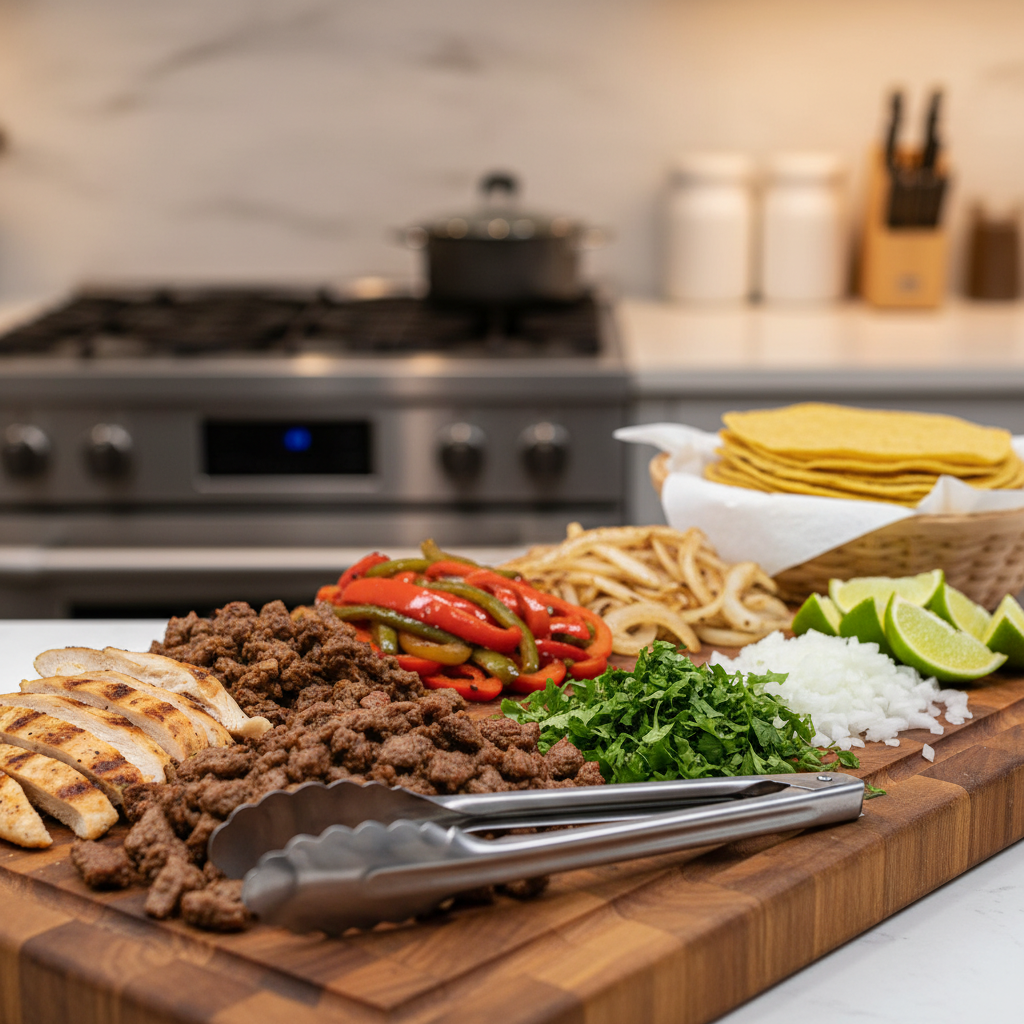
- Tortillas: 2–3 per guest for taco bars; 1 large for fajitas or burritos.
- Protein: ~3–4 oz cooked protein per taco set; ~5–6 oz for bowls.
- Sides: ~4–6 oz rice and ~4–6 oz beans per person; salads ~3–4 oz.
- Toppings: 1–2 oz per item per guest; keep limes plentiful.
Ready-made favorites make decisions easy—our ground beef tacos, shrimp tacos, and burrito bowls anchor variety while keeping prep simple.
Dietary and Allergen Planning
Collect dietary needs during RSVPs and design a core menu that naturally covers vegan, vegetarian, gluten-friendly, and dairy-light preferences. Label proteins and sides clearly, separate utensils, and keep crema/cheese on the side. Offer bowls and corn tortillas to serve gluten-sensitive guests confidently.
- Gluten-friendly: corn tortillas, rice bowls, and clearly labeled proteins.
- Dairy-light: serve cotija and crema on the side; use guacamole for creaminess.
- Vegetarian/vegan: adobo mushrooms, fajita veggies, beans, and salsas.
- Nut awareness: keep toppings nut-free unless requested; label if used.
We color-code labels for boxed meals and separate serving utensils on buffets. It’s a small step that keeps cross-contact low and helps guests self-serve with confidence.
Logistics, Portioning, and Timing
Lock the delivery window, then stage hot and cold stations to shorten lines. Use per-guest counts for tortillas, proteins, and sides. For 40+ guests, set two-sided lines. Open service on time, replenish in waves, and guide guests to seating to prevent bottlenecks near the buffet exit.
Headcount → portions
- Under 25 guests: single-sided buffet; one replenisher is enough.
- 25–60 guests: consider two-sided buffets for speed.
- 60–120 guests: two lines or staggered release by table for smooth flow.
Station layout best practices
- Plates and utensils first; then proteins, sides, toppings, and napkins.
- Keep beverages across the room to reduce congestion at the buffet.
- Label everything; guests choose faster when they can scan at a glance.
For downtown towers, we often schedule a 45-minute load-in to account for elevator traffic. A pre-placed floor plan from the organizer speeds set-up and prevents last-minute table shuffling.
Food Safety and Temperature Control
Keep hot foods at or above 140°F with chafers or insulated carriers and maintain cold items at or below 40°F with ice baths. Use clean utensils for each dish and refresh in waves. Stage allergen-sensitive items away from the center of the line with separate utensils.
- Insulate hot proteins; replace lids between servings to retain heat.
- Refresh salads over fresh ice; rotate salsas when temperatures rise.
- Hand hygiene: provide sanitizer near self-serve tongs for convenience.
For a deeper planning overview from the local market, see this Toronto catering guide. It pairs well with our on-the-ground approach to safe, fast service in busy venues.
Sustainability and Operations
Choose compostable plates and utensils, provide visible waste sorting, and right-size portions to reduce leftovers. Schedule post-service donation or take-home containers when appropriate. Localize produce when possible and consolidate deliveries to minimize trips and elevator time in dense downtown venues.
- Compostables: plant-based servingware and paper-based containers.
- Sorting: place compost and recycling at buffet exit for easy access.
- Right-sizing: portion proteins in waves to match real-time demand.
We also find two smaller refreshes beat one big refill. Guests see abundance, but you waste less because hot pans aren’t sitting open as long.
Tools and Resources
Use a simple planning kit: portion calculator, station layout map, guest dietary list, and a 7–10 day timeline. Add labels, extra tongs, and gloves. Keep a small emergency kit—foil, tape, scissors, sanitizer—so you can fix small issues fast without leaving the room.
- Station map: draw the line on a letter-size page and mark table lengths.
- Dietary list: color-coded by vegan, vegetarian, gluten-friendly, dairy-light.
- Labels: pre-printed for proteins, sides, salsas, and allergens.
- Extra utensils: backups for proteins, sides, and toppings.
- Timeline: confirm order, delivery window, building access, and cleanup plan.
For a broader view of formats that work across offices and outdoor settings, this boardroom-to-BBQ overview shows how different room setups shape the right service style.
Case Studies and Examples
Real events sharpen your plan. Use these quick scenarios to match headcount, service style, and timing. Each example shows how we balance speed, variety, and dietary coverage while keeping lines under 15 minutes at peak and food hot or chilled within safe ranges.
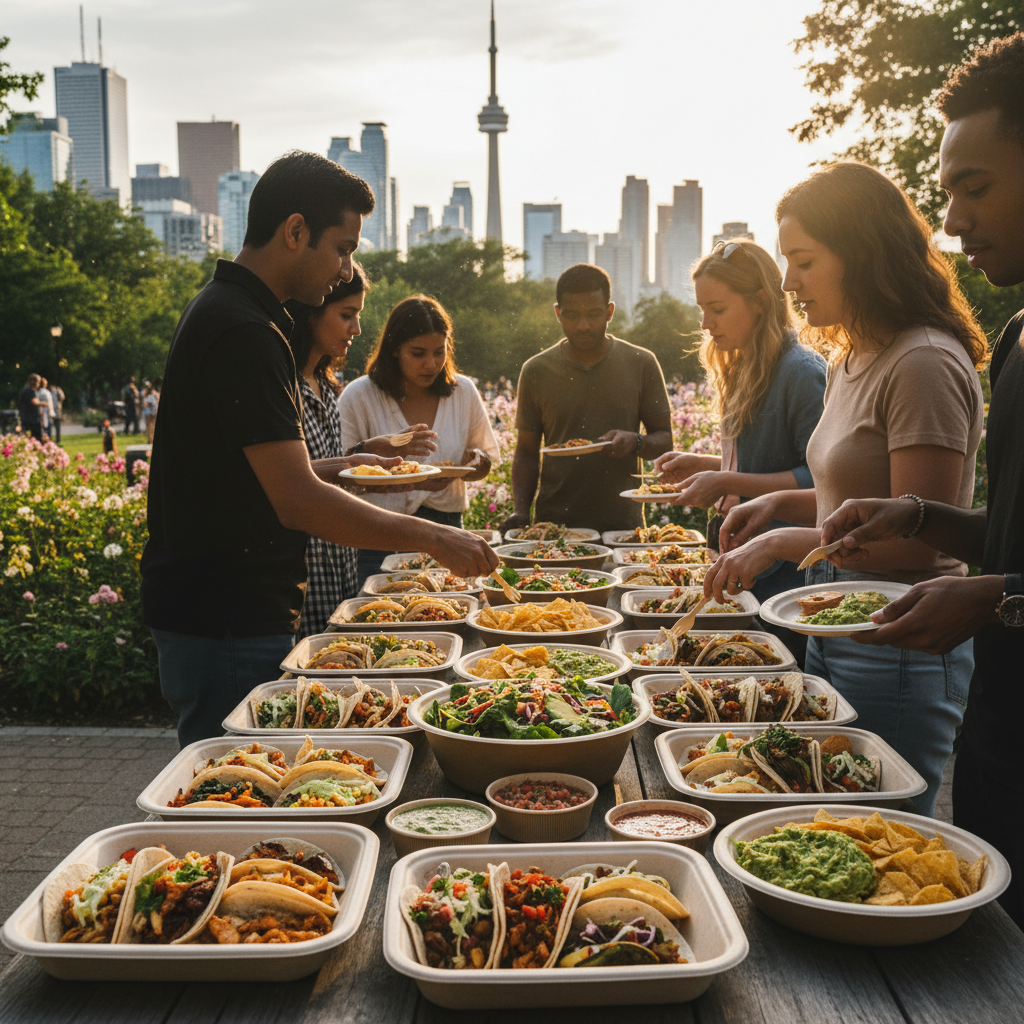
Team offsite near Trinity Bellwoods Park (30 guests)
- Goal: casual outdoor lunch; minimal equipment; fast cleanup.
- Service: drop-off buffet with taco bar; two proteins + one vegan.
- Menu: grilled chicken, adobo mushrooms, rice, beans, slaw, roja + verde.
- Timing: deliver 30 minutes early; open line at 12:00; clear by 12:45.
Downtown training day (80 boxed meals)
- Goal: sealed, labeled meals; dietary clarity; quiet setup.
- Service: individually packaged burrito bowls with color-coded labels.
- Menu: chicken, veggie, and shrimp bowls; chips + salsa sides.
- Timing: staged by door; distribution in five minutes during break.
Evening fundraiser (120 guests, staffed station)
- Goal: theater + speed.
- Service: double-sided taco station with attendants.
- Menu: carne asada, chicken tinga, fajita veggies, pico, cotija on side.
- Timing: set 90 minutes early; peak service in 30 minutes.
Explore styles in detail on our buffet-style page, or talk to our team to fine-tune a layout that matches your room and agenda.
Planning Timeline and Checklist
Use a 7–10 day runway when possible. Confirm headcount, choose a style, and gather dietary notes. Finalize the menu and floor plan, then lock the delivery window. On event day, stage stations, check temperatures, label everything, and assign one person to guide the line at launch.
Simple 10-day timeline
- Day 10–7: lock headcount tiers; pick service style; gather dietary info.
- Day 6–4: finalize menu; sketch floor plan; confirm tables and power.
- Day 3–2: share building access instructions and delivery window.
- Day 1: print labels; prepare utensils; review roles and flow.
- Event day: stage hot/cold; open line on time; replenish in waves.
If you’re short on time, we can still help. Start here: get a catering quote and share headcount, timing, and any dietary needs. We’ll shape a fast, practical plan.
What Affects Catering Value (No Pricing)
Value depends on headcount, service style, menu breadth, dietary accommodations, and venue logistics. Buffets stretch portions well, staffed stations add speed and presentation, and boxed meals boost convenience. Tight elevators, long carries, and rush-hour windows can also influence planning complexity and staffing.
- Headcount tiers: efficiency improves as group size rises.
- Menu breadth: more choices increase prep and on-site staging.
- Dietary coverage: separate utensils and labels keep service inclusive.
- Logistics: loading zones, elevator access, and room resets matter.
When maximizing value, we focus on portion discipline, two-sided lines for 40+, and menus that reuse core prep across proteins to keep quality high and service fast.
Planning an event? Our team at Queen Street West can recommend a service style, portion plan, and layout in minutes. Share your details on our catering page and we’ll get you a clear, workable plan.
Frequently Asked Questions
These short answers cover the most common planning questions we hear in Toronto. They focus on timing, portions, and dietary coverage so you can finalize details quickly and move on to the fun part—enjoying your event.
How far in advance should I plan a Mexican grill catering order?
Seven to ten days offers the smoothest runway to confirm menus, diets, and building access. For smaller groups or repeat orders, a shorter window can work. Share headcount tiers and timing early so we can right-size portions and schedule delivery against downtown traffic.
What’s the simplest menu for mixed diets?
A two-protein taco bar with a vegan option covers most preferences. Offer corn tortillas, rice, beans, fajita veggies, and salsas with dairy on the side. Clear labels and separate utensils keep self-serve fast and inclusive without complicating the setup.
Drop-off buffet or staffed taco station—how do I choose?
Match style to space and speed. Drop-off buffets are simple and stretch portions well. Staffed stations add theater and keep lines shorter for 60+ guests. If your room is tight or timing is strict, staffed service is often the best balance of speed and experience.
How do I keep food hot or chilled during service?
Use chafers and insulated carriers to hold hot foods above 140°F and ice baths or refrigerated inserts to keep salads and salsas below 40°F. Open lids briefly during service and refresh in waves to maintain safe temperatures and great texture.
Key Takeaways
Lock headcount, match service style to space, and use per-guest portion guides. Stage stations for fast flow, label clearly, and refresh food in waves. For 40+ guests, run double-sided lines. Plan 7–10 days out when possible, and reserve delivery buffers around downtown traffic.
- Headcount drives portions; tiers make ordering simple.
- Service style should reflect room size, agenda, and desired speed.
- Labeling and utensil separation keep service inclusive.
- Double-sided lines and staggered refills reduce wait times.
Conclusion
Great Mexican grill catering is planned, not improvised. When you align headcount, service style, menu, and room flow, guests eat hot, fresh plates right on time. Start with portion guides, map stations, and lock the delivery window—then enjoy the event you actually came to host.
Need a hand turning this plan into reality in Old Toronto? Visit our catering page or request a quote. We’ll shape a fast, friendly plan from our Queen Street West kitchen and bring it to your venue right on schedule.