Mexican Event Catering: Key Questions to Save Time in 2026
Plan smarter with 20 key questions to ask before catering Mexican food—portions, logistics, safety, and local Old Toronto tips for smooth, on-time service.
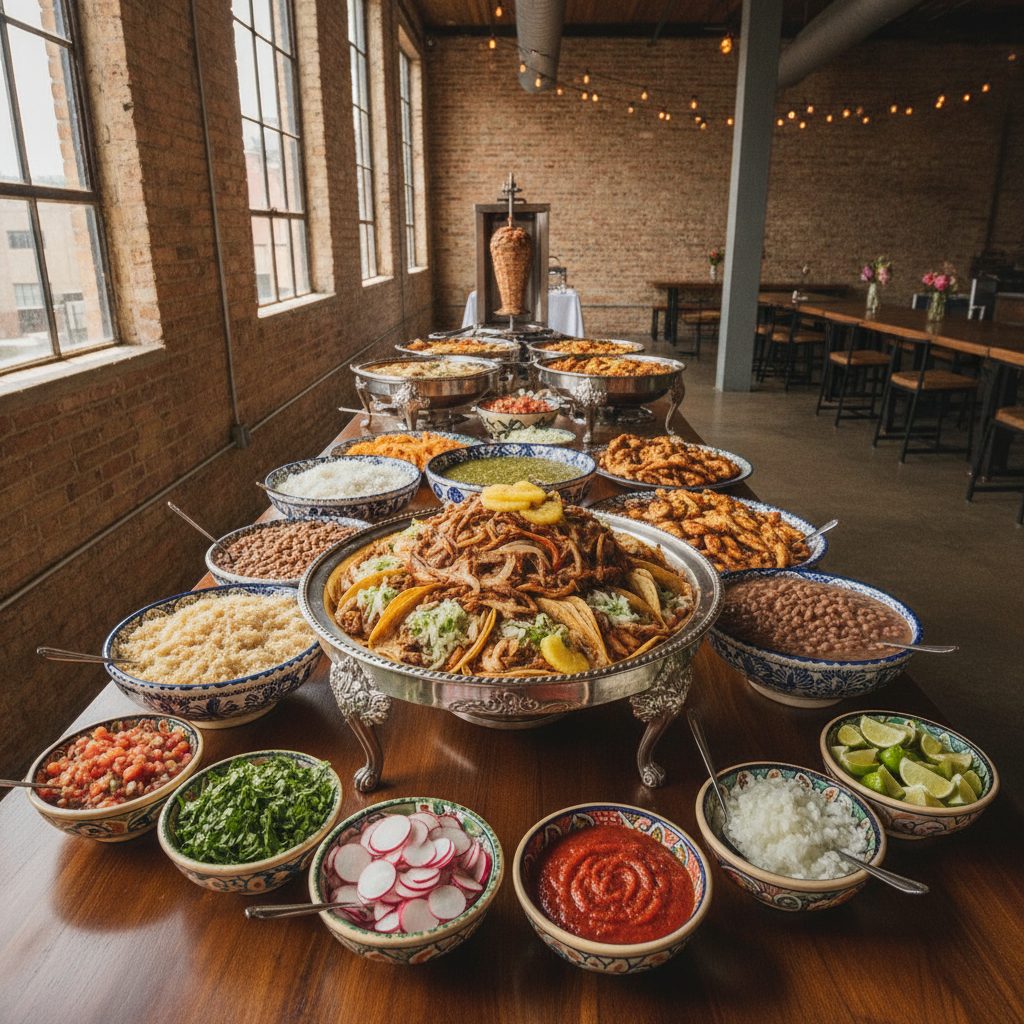
Questions to ask before catering Mexican food are the essential prompts that lock in portions, timing, dietary coverage, and on-site logistics before you book. For events near 746 Queen St W in Toronto, nailing these questions up front prevents day-of surprises, keeps lines moving, and ensures every guest eats hot, fresh food on time.
By Sam Patel • Last updated: 2026-06-15
Quick Summary & Table of Contents
Confirm five pillars—menu fit, portions, service style, delivery window, and safety labeling—before you commit. Then map access (elevators, loading), assign equipment (chafers, fuel), and prepare a leftovers plan. Use our 20-question checklist to avoid shortages, delays, and cross-contact risks.
This complete guide from La Rio’s Mexican Grill (Old Toronto) covers what to ask, why it matters, and how to execute a smooth taco or fajita service for offices, homes, and venues across the Toronto metro.
- What Is Mexican Catering?
- Why These Questions Matter
- How Mexican Catering Works
- Service Styles and Comparison
- 20 Essential Questions to Ask
- Portion Planning Rules
- Food Safety and Allergens
- Local Planning Tips (Old Toronto)
- Tools and Templates
- Case Examples (Toronto)
- Dine-In vs Takeout vs Catering
- Plan Your Menu With Us
- FAQ
- Key Takeaways & Final Steps
What Is Mexican Catering?
Mexican catering is a scaled, pre-arranged meal service—think taco bars, fajitas, and family-style platters—delivered or staffed so groups eat hot, fresh food together. The caterer handles cooking, equipment, and guidance while you manage headcount, venue access, and timing.
At La Rio’s Mexican Grill, we most often set up build-your-own taco bars, grilled fajita stations, and shareable trays of rice, beans, and roasted vegetables. Guests customize plates with tortillas, proteins, and toppings. For Toronto offices and homes, headcounts usually range from 20 to 120, but the same planning framework scales up smoothly.
To align expectations, we recommend you review our catering overview and, if you prefer a classic layout, our buffet-style guide. If your team needs grab-and-go, see individually packaged options to streamline service and reduce line time.
Why These Questions Matter
Precision questions prevent three common failures: portion shortfalls, timing delays, and safety gaps. Clear answers lock in quantities, staffing, and equipment so food stays hot, lines move, and every guest—vegan to gluten-free—gets fed safely.
Here’s the thing: great food can be undermined by weak logistics. We’ve supported Old Toronto offices where freight elevators book in five-minute windows. If you don’t confirm the delivery window and setup time, the buffet opens late and the first 20 guests wait. A single clarified question—“What’s our confirmed arrival window and setup time?”—keeps service on schedule.
Real-world numbers anchor planning. For example, scheduling a 30-minute setup per buffet line, a 10–15% tortilla and protein buffer, and a separate vegan/gluten-free lead station typically reduces line time by a third for groups over 60. These are small choices with outsized impact.
How Mexican Catering Works (From Inquiry to Wrap-Up)
Mexican catering flows through five stages: inquiry, menu fit, logistics plan, service execution, and wrap-up. Each stage requires decisions on headcount, dietary mix, access, holding method, and post-event handling. Documenting each step enables a smooth, on-time meal.
Stage 1: Inquiry
- Share date, address, headcount range, and preferred service style (drop-off, set-up, staffed).
- Flag dietary needs (vegetarian, vegan, gluten-free, dairy-free, halal-friendly).
- Note venue constraints (stairs, elevator booking, loading zone, table space).
Stage 2: Menu fit
- Choose a main format: build-your-own tacos, fajitas, or family platters.
- Balance proteins: one chicken, one beef or pork, one vegetarian/vegan.
- Add sides that travel well: rice, beans, roasted veggies, chips and salsa.
Stage 3: Logistics plan
- Confirm delivery window, setup time, and table placement by simple map or photo.
- Assign equipment: who brings chafers, fuel, serving utensils, and disposables.
- Design guest flow: plates first, proteins next, toppings after, salsas last.
Stage 4: Service execution
- Keep hot items in chafers; rotate refills to maintain heat and freshness.
- Stagger tortillas so they stay warm and pliable throughout peak service.
- Manage the line with a staffer or clear signs to speed choices.
Stage 5: Wrap-up
- Pack leftovers in food-safe containers with reheating guidance.
- Record actual headcount and favorite items for next time.
- Capture quick feedback on portions, timing, and dietary coverage.
Want an end-to-end walkthrough? Our taco bar catering guide shows how we stage proteins, tortillas, and toppings to keep service times tight and guests happy.
Service Styles and a Helpful Comparison
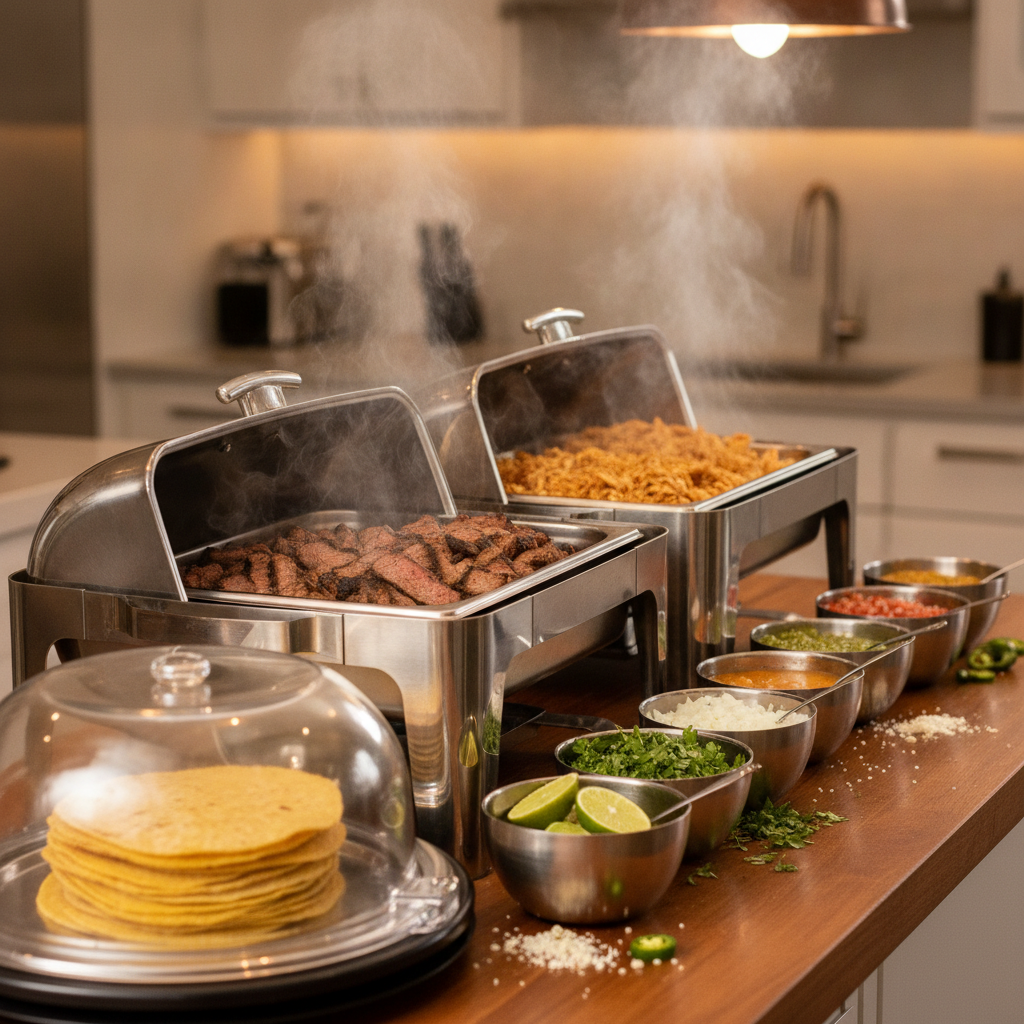
Pick service style by headcount, access, and formality. Drop-off fits quick lunches, set-up adds polish without staff, and staffed service best supports weddings and large groups. The right style keeps food hot, lines short, and cleanup simple.
| Style | Best for | Pros | Watch-outs |
|---|---|---|---|
| Drop-off | Teams 10–60 | Fast, minimal footprint | Client handles setup/holding |
| Set-up | Parties 30–120 | Pro layout, hot holding provided | No on-site staff after setup |
| Staffed | 120+ or formal | Speed, portion control, allergy oversight | Needs space for staff and staging |
Not sure which to choose? If your venue is tight or shared, set-up often delivers the best balance—professional presentation without additional people in the room. For outdoor events or long service windows, staffed service keeps quality consistent across peaks and lulls.
For more layout ideas, scan our buffet-style Mexican catering tips and see whether a parallel line or a U-shaped table suits your space better.
20 Essential Questions to Ask Before Catering Mexican Food
Use this checklist to align expectations before you book. It covers menu fit, portions, dietary needs, logistics, safety, and post-event handling. Clear answers reduce risk, shrink line time, and prevent last-minute complications.
Menu and portions
- Which mains travel best for our venue and time frame?
- How many proteins do you recommend for our guest mix?
- What are the portion sizes per guest for tacos, rice, and beans?
- How do you keep tortillas warm and soft during service?
- Can we add a kid-friendly option without extra complexity?
Dietary and allergens
- Which items are vegetarian, vegan, and gluten-free by default?
- How do you prevent cross-contact for gluten and dairy?
- Can you provide an allergen and ingredient sheet for every dish?
- What’s your plan if multiple guests require dairy-free and gluten-free?
- Do you label chafers and toppings clearly on-site?
Service style and staffing
- Which service style fits our headcount and venue constraints?
- Who handles setup, refills, line management, and cleanup?
- How long will hot holding remain effective without quality loss?
- Do we need a staffer at the protein station to guide portions?
- What’s your contingency plan for delays or elevator issues?
Logistics and safety
- What’s our confirmed delivery window and setup start time?
- Who brings chafers, fuel, serving utensils, and waste bins?
- What temperatures do you target for hot and cold items on-site?
- How do you pack, cool, and label leftovers safely?
- What instructions do you provide for reheating at home?
Keep this list handy. These are the questions to ask before catering Mexican food that consistently lead to smooth, memorable events in our Toronto experience.
Portion Planning Rules (Real-World Formulas)
Plan 2–3 tacos per adult, 1–2 for kids, and roughly 6–8 ounces of prepared protein per adult when tacos are the main. Add 4–6 ounces of sides per guest. For mixed menus, nudge portions down by 10–15% to balance variety and reduce waste.
- Adults: 2–3 tacos; teens trend high at 3.
- Kids: 1–2 tacos; add rice/beans to fill plates.
- Protein: ~6–8 oz per adult; ~4–5 oz per kid.
- Rice/beans: 4–6 oz combined per person.
- Guacamole: 1.5–2 oz per person; salsa 2–3 oz.
- Tortillas: 2–3 per person; keep a 10% buffer.
Example: 80 guests (70 adults, 10 kids). Target 70 × 7 oz + 10 × 4.5 oz ≈ 530–560 oz protein—about 33–35 pounds prepared. Add 160–240 tortillas and 25–30 pounds of sides. Buffers absorb late RSVPs and big appetites without slowing the line.
If you prefer exact guidance, we’ll translate your headcount into a portion map and line plan. Start with our quick catering intake and we’ll send a tailored estimate with timing and setup notes.
Food Safety and Allergen Confidence
Verify two things: temperature control and clear labeling. Keep hot foods properly held, cold foods chilled, and common allergens separated. Ask your caterer to document holding targets, time limits, and cross-contact prevention in writing.
- Hot holding: use chafers and fuel correctly; rotate refills to maintain heat.
- Cold holding: keep salads and crema chilled; swap smaller pans more often.
- Time control: define how long each item can sit out before being refreshed.
- Labeling: list ingredients and allergens on a one-pager available at the table.
- Leftovers: pack promptly, chill quickly, and reheat thoroughly later.
Operational tip: Lead your line with vegan protein and corn tortillas, then place dairy-containing toppings farther down. This reduces accidental cross-contact and speeds decisions for guests with dietary needs.

Local Planning Tips for Old Toronto Events
Old Toronto venues range from heritage buildings to modern condos across the Toronto metro, so confirm elevator bookings, loading zones, and parking. For events near Trinity Bellwoods Park, plan extra buffer for traffic and foot flow. A 15–30 minute setup window per buffet line keeps service on time.
Local considerations for Old Toronto
- Weekend congestion: Near Trinity Bellwoods Park, load-in buffers help hit tight arrival windows.
- Seasonal timing: In winter, add time for snow and indoor staging; in summer, plan shade and hydration for outdoor lines.
- Operational nuance: Along Queen St W, confirm where chafers may be placed and whether open-flame fuel is permitted indoors.
Hosting at a studio near The Bentway? Factor in the shared freight elevator and the distance from loading to service tables. Small access details like these often decide whether your buffet opens exactly at the scheduled start.
Tools and Templates You Can Use
Use a lightweight toolkit: a shareable intake form, an allergen/ingredient sheet, a day-of run-of-show, and a leftovers guide. These templates keep everyone aligned and reduce back-and-forth emails.
- Intake form: date, address, service style, headcount, dietary mix, access notes.
- Allergen sheet: dish-by-dish ingredients with icons for dairy/gluten/vegan.
- Run-of-show: delivery window, setup start, service open, refills, wrap-up.
- Leftovers guide: safe cooling, reheating, and day-after serving ideas.
- Portion calculator: inputs headcount and menu style to output quantities.
Prefer grab-and-go? Our individually packaged catering aligns with hybrid meetings and limits line traffic. For hosted celebrations, compare layouts in our buffet-style guide.
Case Examples (Toronto Scenarios)
Real events prove the plan. See how specific questions and prep turned three different Toronto gatherings into smooth, memorable meals—each with clear timing, balanced portions, and confident dietary coverage.
Tech team lunch, Queen St W office (60 guests)
- Challenge: short elevator windows and a narrow lobby.
- Questions used: delivery window, table map, who brings chafers and fuel.
- Outcome: two parallel lines; open on time; tacos stayed hot through a 45-minute rush.
Backyard graduation near Trinity Bellwoods (45 guests)
- Challenge: July heat and shade management.
- Questions used: canopy placement and cold-holding plan for salads and crema.
- Outcome: staggered refills in smaller pans; guests ate comfortably; leftovers safely packed and labeled.
Studio celebration near The Bentway (110 guests)
- Challenge: shared freight elevator and long push from loading to service tables.
- Questions used: elevator booking, runner staffing, setup timing per buffet line.
- Outcome: service opened exactly on time; vegan line led; signage sped choices.
If you’re planning a similar event, our taco bar planning tips outline the parallel-line approach we used in these scenarios.
Dine-In vs Takeout vs Catering: Picking the Right Path
Match the format to your goals. Dine-in suits hosted meals with ambiance, takeout is fastest for small groups, and catering scales fresh food to larger headcounts with equipment and planning support. Choose based on timeline, headcount, and venue access.
- Dine-in: best for seated gatherings and team celebrations.
- Takeout: great for quick huddles or same-day plans.
- Catering: optimized for 15+ guests with planned timing and hot holding.
This decision also ties to our pillar topic on trade-offs between takeout and dine-in for Mexican grills. For group service, catering often provides line speed, equipment, and labeling that a simple pickup can’t match—especially past 15–20 guests.
Plan Your Menu With Us
Need help turning headcount into a reliable order? We’ll map portions, timing, and dietary coverage with you in minutes. Share your date, address, and guest mix to get a tailored plan for your venue.
Soft invite: Planning an office lunch or backyard party in Toronto? Reach out via our catering intake form for a quick planning session and a ready-to-send checklist.
FAQ: Mexican Catering Questions, Answered
These quick answers cover planning time, portioning, dietary coverage, and what to confirm with your venue and caterer so service starts on time and runs smoothly.
How far in advance should I book Mexican catering?
For predictable headcounts, confirm 7–14 days ahead. For peak seasons or 100+ guests, aim for 3–4 weeks. Lead time locks in delivery windows, equipment, and staffing, which reduces day-of risk significantly.
How many tacos per person should I plan?
Plan 2–3 tacos per adult and 1–2 for kids when tacos are the main. Provide one vegan or vegetarian option and keep tortillas warm to prevent bottlenecks at the start of the line.
What’s the best service style for an office lunch?
For 20–80 guests, a set-up taco bar is efficient: professional layout, hot holding provided, minimal footprint. For 80+ or tight timelines, add a staffer to manage refills and portion flow.
How do we handle allergens safely?
Ask for an ingredient and allergen sheet. Separate vegan and gluten-free items first in line; place dairy toppings farther down the table. Keep dedicated utensils for each dish and label chafers clearly.
Key Takeaways & Final Steps
Lock in five pillars—menu fit, portions, delivery window, holding method, and allergen labeling—and your Mexican catering will run smoothly. Use the 20-question checklist, match service style to venue, and keep a 10% buffer on tortillas and protein.
- Use the “20 Essential Questions” list before you book.
- Pick service style based on headcount and access.
- Plan 2–3 tacos per adult; keep tortillas warm throughout service.
- Document holding targets and time limits; label allergens clearly.
- Lead your line with vegan/gluten-free options to reduce cross-contact.
If you’re ready, start with our catering intake form and we’ll tailor a plan for your venue in Old Toronto or anywhere across the city. Hosting a small team? Check our individually packaged options for fast, tidy service.
For broader planning context, these Toronto event tips discuss lead-time and access details many planners miss, and this package selection guide outlines portioning for mixed menus. For corporate teams, see a corporate catering overview that highlights scheduling and dietary coordination fundamentals.