Toronto Mexican Catering: Ready with a 2026 Checklist?
Use this Toronto Mexican restaurant catering checklist to plan portions, timing, and labeling. Built in Old Toronto by La Rio’s Mexican Grill.
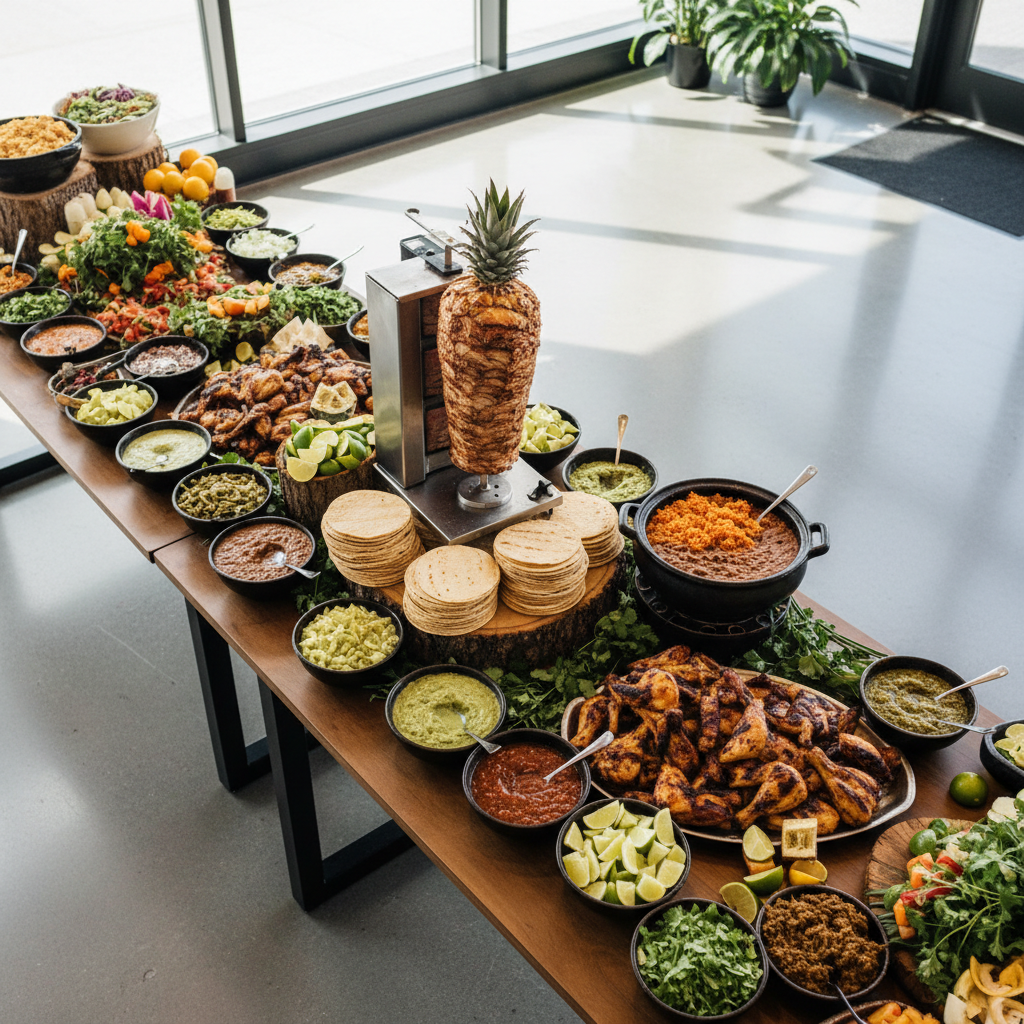
A Toronto Mexican restaurant catering checklist is a structured, step-by-step plan for ordering, staging, and serving Mexican dishes at events across the city. It covers portions, dietary needs, timing, and venue logistics so nothing is missed. From our Old Toronto base at 746 Queen St W, La Rio’s Mexican Grill uses this checklist to keep events smooth and guests satisfied.
By Sam Patel — Founder, La Rio’s Mexican Grill
Last updated: June 7, 2026
Summary
Use this Toronto Mexican restaurant catering checklist to right-size portions, lock delivery windows, and label allergens. Confirm headcount 7 days out, finalize menu 72 hours out, and hold hot foods at safe temperatures. La Rio’s Mexican Grill in Old Toronto supports dine-in, takeout, and full-service catering citywide.
This complete guide is built for office coordinators, wedding planners, and family hosts who want a stress-free Mexican spread—tacos, fajitas, bowls, and more—delivered on time and set up right.
- Clear definitions and why this checklist matters
- Step-by-step planning workflow with timelines
- Buffet vs boxed vs taco-bar comparison
- Food safety temperatures and staffing ratios
- A printable, copy/paste checklist you can use today
Need hands-on help? Explore our catering services or set up a quick consult with our catering request form.
What is a Toronto Mexican restaurant catering checklist?
A Toronto Mexican restaurant catering checklist is a standardized plan that covers guest counts, menu mixes, diet flags, delivery logistics, and serving equipment. It prevents shortages and confusion, ensuring tacos, fajitas, and sides arrive hot, labeled, and on schedule across Old Toronto and the broader Toronto metro.
In practice, it’s your one-stop organizer. You’ll document who’s coming, what they can eat, how food will travel, and who is plating. The checklist also captures timing: order submission, confirmation, prep, dispatch, setup, service, and teardown.
Core elements you should always include
- Headcount tiers: base, +10% buffer, and last-minute adds.
- Menu map: proteins, veg options, starches, salsas, and toppings.
- Dietary labeling: gluten-friendly, dairy-free, vegetarian, nut-aware.
- Logistics: loading access, elevators, parking, and contact-on-arrival.
- Equipment: chafers, fuel, tongs, serving spoons, and gloves.
We use this same backbone for dine-in parties, taco-bar catering, and buffet-style setups.
Why this checklist matters for Toronto events
This checklist reduces waste, prevents shortages, and keeps food safe. Toronto venues vary in access and timing rules; a written plan confirms arrival windows, portion math, and labeling so guests with dietary needs are served confidently and hot items stay above safe temperatures during service.
Here’s the thing: event food goes fast. Portions, serving speed, and line flow determine satisfaction. Across 50–150 person office lunches, we see service lines move 20–30 guests every five minutes when the buffet is mirrored (left/right) and labeled clearly.
- Better estimates: 2–3 tacos per light eater; 3–4 for hungry guests.
- Safety first: hot holding at or above 135°F; cold holding at or below 41°F.
- Faster lines: two identical lines typically cut wait times by 40–50%.
- Label clarity: color dots or tent cards reduce hesitation and repeats.
In Old Toronto office towers, elevator capacity often gates timing; planning trays per trip and staging space keeps the schedule intact.
How the catering process works (step-by-step)
Plan 10–14 days out. Confirm headcount at T–7 days, finalize menu at T–72 hours, and share access notes at T–48 hours. On event day, allow 45–60 minutes for setup per 100 guests. Keep hot foods above 135°F and restock every 15–20 minutes for peak lunch windows.
Timeline you can trust
- T–14 to T–10 days: lock venue, outline dietary needs, select format (buffet, taco bar, boxed).
- T–7 days: confirm headcount (+10% buffer), note vegetarian/vegan counts, list allergens.
- T–72 hours: finalize menu and portions, share delivery window and access notes.
- T–48 hours: send floor plan, serving table lengths, and power/fuel policies.
- Event day (–60 to –15 minutes): arrival, unload, chafer setup, temperature check, labels placed.
- Service: mirror lines, restock pans every 15–20 minutes, spot-clean surfaces every 30 minutes.
- Teardown (+30 minutes): pack leftovers safely, remove fuel, leave space clean.
Local considerations for Old Toronto
- Weekday deliveries near Trinity Bellwoods Park face heavier lunch traffic; plan a 15–20 minute arrival buffer.
- Winter events need covered entry staging; snow and slush increase unload time by 10–15%.
- Some heritage venues near Fort York National Historic Site limit open flame; confirm fuel policies for chafers in advance.
For hands-on setup support, our team manages full-service staging through our catering program.
Service formats: buffet, boxed, or taco bar?
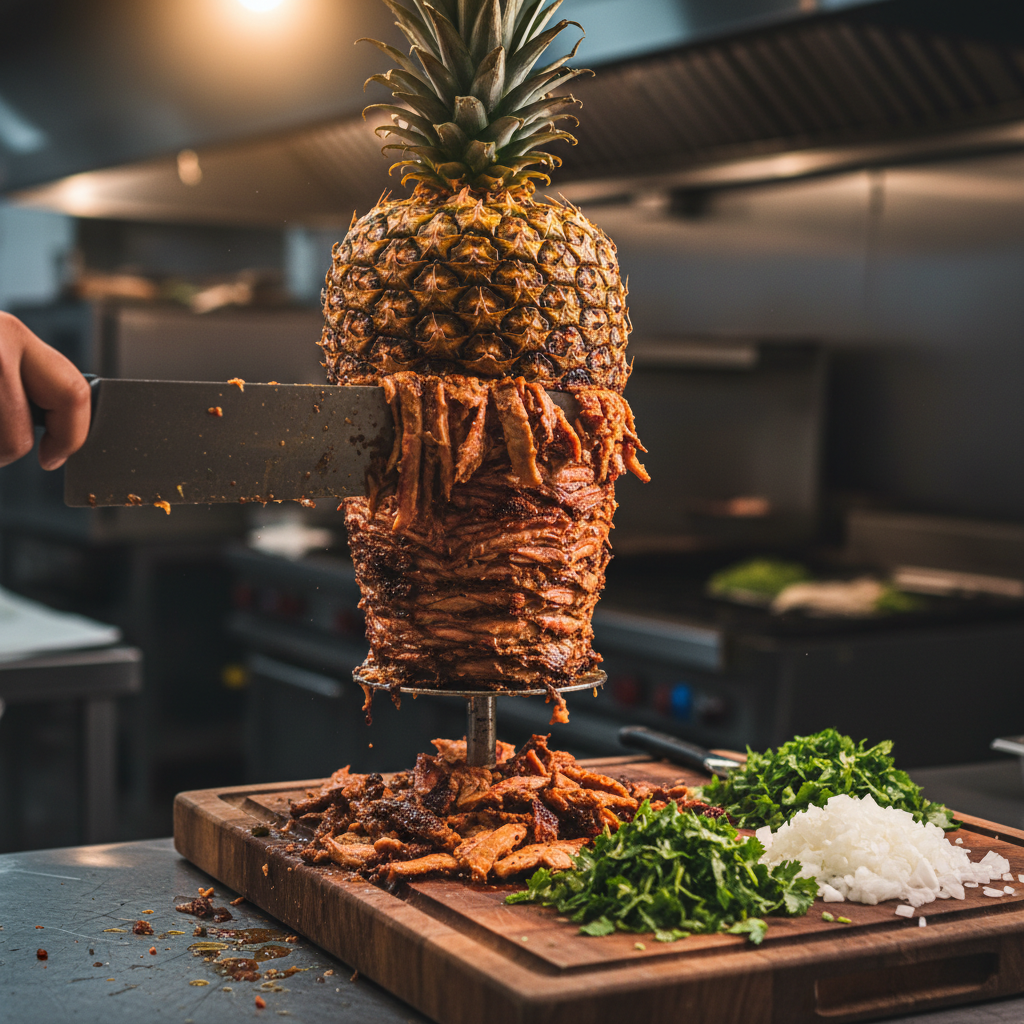
Choose buffet for speed and variety, boxed for convenience and individual labeling, and taco bar for interaction and freshness. Match format to guest count, venue space, and dietary needs. Taco bars shine from 25–120 guests; boxed meals scale cleanly for hybrid meetings.
Each format has trade-offs. Use the table below to decide what fits your venue, staffing, and guest profile.
| Format | Best for | Pros | Considerations |
|---|---|---|---|
| Buffet | 80–250 guests | Fast throughput, abundant variety, easy seconds | Needs space and chafers; labels essential for allergens |
| Taco Bar | 25–120 guests | Interactive, fresher tortillas, visual appeal | More utensils and topping bowls; line guidance helps |
| Boxed | 10–200 guests | Grab-and-go, airtight allergen control, tidy cleanup | Less communal feel; advance labeling time |
Not sure? Browse our buffet-style Mexican catering and individually packaged options, or talk through a hybrid setup via our quick request form.
Portion planning and dietary accommodations
Plan 3 tacos per average adult and 4 for hearty appetites, with 10–15% vegetarian or vegan portions unless you have exact counts. Provide two salsas, one mild and one hot, plus a dairy-free crema option. Label trays clearly to speed lines and protect guests with allergens.
Smart portion math
- Tortillas: 3 per person baseline; add 10% for seconds.
- Proteins: 4–5 oz cooked meat per person across options.
- Veg mains: 6–7 oz per vegetarian/vegan guest (e.g., fajita veggies, beans).
- Sides: 4 oz rice + 4 oz beans per person; chips at 1.5–2 oz per person.
- Salsas: 1.5–2 oz per person across mild, medium, hot.
Dietary clarity that builds trust
- Allergen cards: list dairy, gluten, sesame where applicable.
- Color dots: one system for all trays (e.g., green = vegetarian).
- Separate utensils: dedicated tongs for each protein and veg.
Clear signage cuts duplicate questions by 30–40% and keeps food lines moving. For menu ideas guests recognize, see our taco bar catering overview.
Logistics: delivery, setup, and staffing
Book delivery windows 20–30 minutes ahead of service, assign a contact-on-arrival, and reserve elevators and loading areas. For 75–150 guests, two attendants improve speed and cleanliness. Expect 45–60 minutes to set, label, and temperature-check a full buffet line.
Delivery details that matter
- Arrival buffer: 20–30 minutes before service time.
- Access notes: loading dock, elevator, buzz code, floor number.
- Table lengths: 16–24 linear feet for mirrored buffets serving 120.
Staffing ratios (practical)
- Up to 60 guests: 1 attendant covers tidy restocks and label checks.
- 75–150 guests: 2 attendants reduce wait times by ~30%.
- 200+ guests: 3+ attendants across entry, line flow, and replenishment.
When you need white-glove setup, our full-service catering team handles staging, chafers, and on-site temperature logs for compliance.
Food safety: temps, labeling, and leftovers
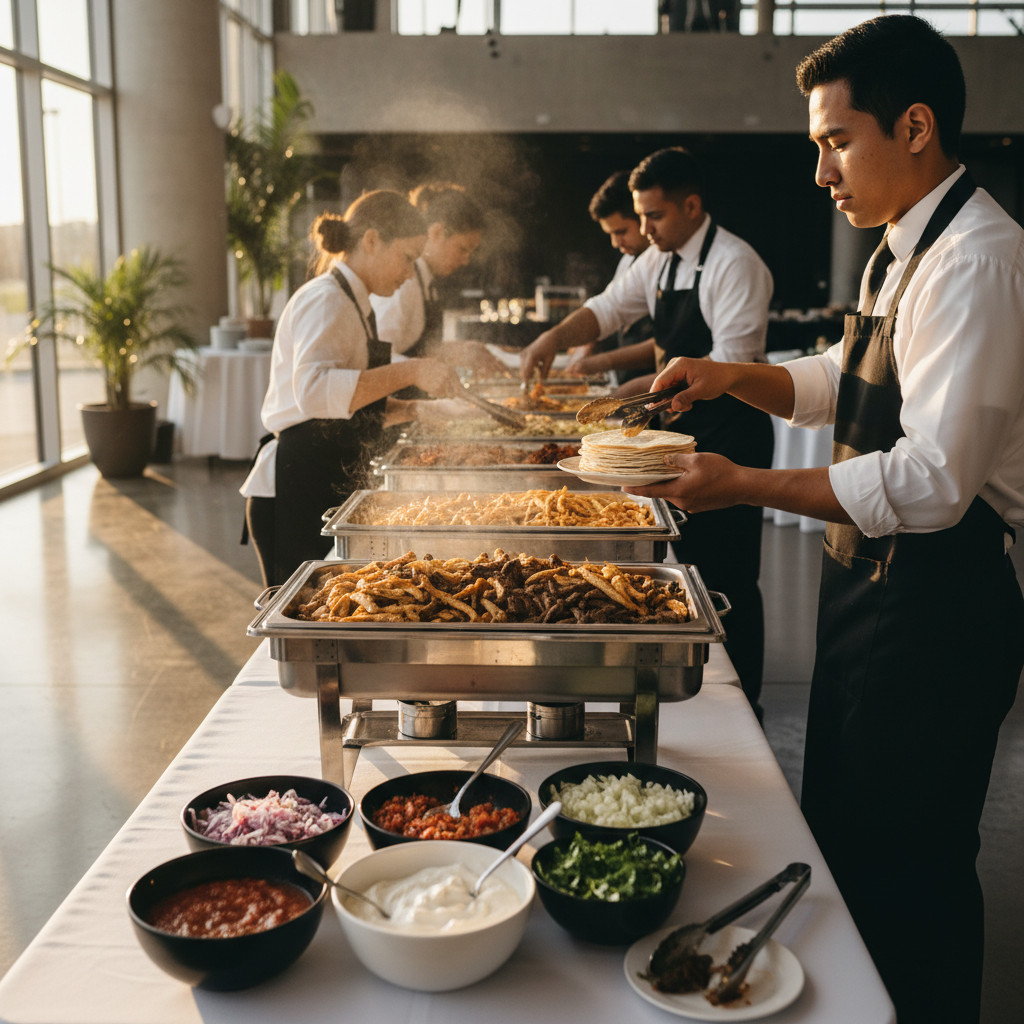
Hot foods should be held at or above 135°F, and cold items at or below 41°F. Use chafer fuel or electric warmers, rotate trays every 15–20 minutes, and label allergens. Pack leftovers promptly in shallow containers and refrigerate within 2 hours.
- Temperature checks: probe thermometers before service and at 30-minute intervals.
- Tray rotation: smaller, more frequent refills keep texture and temp right.
- Allergen control: separate utensils and physical spacing of trays.
- Leftovers: close lids, date-time mark, and refrigerate quickly.
A clean, labeled line can reduce cross-contact risks dramatically and keeps your team confident when guests ask questions.
Menu building: examples from La Rio’s
Balance two proteins, one vegetarian main, and two classic sides. Add chips, salsa, and a fresh garnish set. For 100 guests, plan 300 tortillas, 30–35 pounds cooked proteins total, and 25–30 pounds of sides. Offer mild and hot salsa plus a dairy-free crema.
- Classic Taco Bar (50–120): al pastor + grilled chicken, fajita veggies, rice, beans, salsa roja, salsa verde, pico, lime, cilantro.
- Buffet Fajitas (80–200): marinated steak and chicken, peppers and onions, warm tortillas, Mexican rice, charro beans, guacamole.
- Boxed Bowls (20–150): base of rice/greens, protein or veggies, salsa and garnish; sealed and labeled individually.
Browse our buffet lineup or customize a taco bar with extra heat or added crunch. If you prefer sealed packaging for allergen control, see individually packaged catering.
Tools and resources: printable checklist
Copy the checklist below into your planning doc. It covers headcount, menu, diet flags, logistics, staffing, equipment, and safety. Use the timeline cues (T–days) to keep everything on track and assign owners for each item.
Copy/paste checklist
- Headcount: base, +10% buffer, vegetarians/vegans, allergies listed.
- Menu: proteins (2), vegetarian main (1), sides (2), salsas (2+), toppings set.
- Timeline: T–14 venue; T–7 headcount; T–72 menu final; T–48 access notes.
- Logistics: loading, elevator, parking, door code, contact-on-arrival.
- Tables/Power: linear feet, outlets, fuel policy, signage positions.
- Equipment: chafers, fuel, pans, tongs, spoons, gloves, sanitizer.
- Staffing: attendants count, line mirroring, trash and wipe cadence.
- Safety: 135°F hot / 41°F cold, probe checks, allergen labels.
- Leftovers: containers, labels, refrigeration plan.
- Backup: add 5–10% extra tortillas and sides for late arrivals.
Ready to lock details? Start with our catering planner and we’ll co-author your timeline.
Case studies: real Toronto scenarios
Office lunch for 90? Wedding cocktail hour for 140? Community gala for 220? These scenarios show how we size portions, label allergens, and plan setup times from our Old Toronto location to venues across the city.
Office lunch in Old Toronto (90 guests)
We scheduled arrival 30 minutes early, used a mirrored buffet, and portioned for 3 tacos per person with 12% vegetarian. Service moved ~25 guests per five minutes; two attendants kept trays hot and tidy.
Wedding cocktail hour (140 guests)
Taco stations with two proteins and a vegan option. Finger-food setups increased napkin use by ~30%. We placed allergen tents at eye level, which cut repeated questions by about one-third.
Community gala (220 guests)
Buffet fajitas with three service lines. Elevator staging required three trips; we pre-sorted trays by line to save ~10 minutes. Leftovers were boxed and cooled within the two-hour window.
To explore formats for your team, review our buffet guide or spin up a custom quote request.
Best practices to avoid shortages
Mirror lines, label clearly, and add a 10% portion buffer. Stagger restocks in smaller pans every 15–20 minutes. Keep tortillas warm and covered. Post one attendant at the line and one at the back-of-house station for rapid refills.
- Mirrored lines: two identical setups halve the queue length.
- Smaller refills: keeps sizzle and prevents overcooking.
- Warm tortillas: wrapped in insulated containers; replenish often.
- Visible labels: protein names + heat level + diet flags.
- Garnish control: lime and cilantro at the end to prevent bottlenecks.
These habits consistently lift guest satisfaction and reduce waste at the same time.
Toronto sourcing and seasonality
Toronto’s growing seasons affect salsa brightness and garnish choices. Plan for peak-fresh tomatoes July–September and rely on roasted salsas and pickled add-ons in winter. Delivery buffers should expand during snow and slush periods for safe, on-time arrival.
- Summer: brighter pico de gallo and herb-forward garnishes.
- Winter: roasted salsa roja and warm sides keep lines happy.
- Shoulder seasons: account for rain; add 10–15 minutes to unload.
Seasonality tweaks keep flavor consistent and lines moving despite weather swings.
Quick references and citations
Use established planning frameworks to cross-check your run-of-show. These references outline timelines, setup tips, and menu planning strategies relevant to Toronto events and corporate lunches.
For a planning cross-check, see these perspectives on private event catering checklists, broader Toronto event food planning tips, and a corporate catering guide that emphasizes meeting formats and timing.
FAQ: Mexican catering in Toronto
These quick answers cover lead times, guest counts, and packaging formats. They’re designed for office managers and event hosts planning Mexican catering in Old Toronto and across the city.
How far in advance should I book Mexican catering?
Aim for 10–14 days for medium events and 3–4 weeks for large, multi-room setups. We can often accept rush requests if you have flexibility on delivery windows and menu choices.
What format is best: buffet, taco bar, or boxed?
Buffets serve large groups fastest. Taco bars are interactive and great for 25–120 guests. Boxed meals work best for training rooms and hybrid meetings where seating is spread out.
How do you handle allergens and dietary needs?
We label every tray with clear diet flags and keep separate utensils for each protein and vegetarian item. Individually packaged options add another layer of control for mixed-diet groups.
How much setup time should I allow at the venue?
Plan 45–60 minutes per 100 guests for unloading, chafer setup, temperature checks, and labeling. Add 10–15 minutes if elevators or security checkpoints are involved.
Conclusion and next steps
Use this Toronto Mexican restaurant catering checklist to right-size portions, protect guests with clear labels, and keep service on schedule. Lock your headcount, finalize your menu 72 hours out, and assign one point person for arrival and setup.
Key takeaways
- Mirror lines and label clearly to cut waits by up to half.
- Hold hot foods at 135°F+ and restock in smaller pans.
- Book arrival 20–30 minutes before service; confirm access notes.
- Keep a 10% buffer on tortillas and sides.
Soft CTA
Want our team to co-author your plan? Explore La Rio’s catering or start a quick quote. We’ll tailor buffet, taco bar, or boxed formats to your venue.
Related resources at La Rio’s
Plan faster with our internal guides and format pages. They show menu structures, portion ranges, and setup notes you can adapt to your venue and guest profile in Old Toronto and beyond.
Dive deeper into taco-bar setups, explore buffet planning, choose individually packaged meals, or contact us through the catering request form. When you’re ready, our catering overview ties everything together.